Sunday, June 5, 2011

The Life of Saint Margaret of Scotland


Born

Died
c. 1045
Kingdom of Hungary

 16 November 1093 (aged c. 48)
Edinburgh Castle, Kingdom of Scotland
Honored in Roman Catholic Church; Anglican Communion
Canonized 1250 by Pope Innocent IV
Major shrine Dunfermline Abbey
Feast 16 November;
10 June (pre-1970 General Roman Calendar)
Attributes reading
Patronage Dunfermline; Scotland; The Queen's Ferry; Anglo-Scottish relatio
Margaret was the granddaughter of Edmond Ironside, and grand niece of Saint Edward the Confessor, whose festival the Church celebrates on the fifth of January.

In order that we may clearly understand her life, let us glance at the state of affairs in England at the time of her birth.

Edmond had been assassinated in 1017, when Canute, king of Denmark, took advantage of this circumstance. and found means to have himself proclaimed monarch of all England. He likewise constituted himself guardian of the two sons of Edmond till they should be of age to succeed their father in the kingdom of the Western Saxons. He sent to Sweden secretly the two princes, who were named Edward and Edmond. The Swedish monarch notwithstanding the instructions he had privately received to take away the lives of the two princes, refused to imbrue his hands in innocent blood, and this conduct was rendered still more honorable and noble, by the fact of his having reason to dread the cruelty and power of Canute.

The king of Sweden therefore sent Edward and Edmond to the court of Hungary, where they were received with great honors, and the king of that nation undertook to educate them both in a manner conformable to their birth.

Edmond, the eldest of the princes, died without posterity. Edward, his brother, married Agatha, sister of the queen of Hungary. She was a most virtuous princess, and gifted with every good quality of head and heart. She became the mother of Edgar, of Christina, who took the religious habit, and of Margaret concerning whom we are going to write. Canute died after a reign brilliant in the eyes of the world, but stained by injustice and ambition. He was succeeded by Harold and Hardicanute, who after a very short reign transmitted the English crown to Saint Edward, the kinsman of our Saint.

As soon as this prince was seated on the throne, he invited Edward, the last son of Edmond, to come from Hungary to England with his children. He received them in London, A.D. 1054, with every possible mark of honor and affection.

Both the king and the prince whom he had recalled from Hungary having died, Edgar naturally succeeded to the throne of Saint Edward; but as he was as yet very young, and having been born in a foreign country, these circumstances were made an occasion to exclude him from the crown, and place it on the head of Harold.

The latter pretended that Edward had appointed him to be his successor. William, Duke of Normandy, set up a similar pretension. In consequence of this, he crossed the sea, conquered England, and killed Harold in the celebrated battle which was fought near Hastings, October 14th, 1066. Many of the English people declared for Edgar, but all to no purpose. This prince was too weak to support himself by force of arms, and he and all his nobility were obliged to receive their vanquisher at London.

At last being constrained to fly from the tyranny of William the Conqueror, he embarked with his sister, Margaret, on board a ship which was cast by a storm on the coast of Scotland. Malcolm, king of that country, gave a warm reception to them both. He was the more anxious to act thus, as he himself had been once in a situation resembling theirs.

William sent to Malcolm, demanding the surrender of the fugitives into his hands, but the generous prince refused to be a party to such black treason. His refusal kindled the fires of war, but the Scotch defied William's troops, and the latter was obliged to sign a treaty of peace, one of the conditions of which was, that William should act towards Edgar as though he were his friend.

In the midst of all those heart-breaking vicissitudes, Margaret displayed the greatest patience and resignation, and we are now going to narrate some of the countless virtues which won for her the veneration of all Scotland.

Hating wordly vanities and appreciating all its pomps and glories according to their just value, her whole ambition was to render herself agreeable to the King of Heaven, who, while here on earth would not reign over the people, except from the cross of Calvary bedewed with His blood. Mortification, meditation, and prayer, constituted her chief delights. Living for Jesus Christ alone, it was her joy and consolation to commune with Him in the silence of the tabernacles. Outside the holy temples, she beheld. Him in his representatives, the poor, and seized every occasion of ministering to their wants, and assuaging their sorrows.

Malcolm was deeply affected by the contemplation of so much virtue, and began to conceive the greatest esteem for Margaret. He proposed to unite himself to her by the bonds of marriage.

Margaret acquiesced, and was crowned queen of Scotland, A.D. 1070. She was then twenty-four years of age.

Her gentleness, her respectful bearing, her condescension, and other virtues, soon gave her undivided control over her husband's heart. She employed this control, to make religion and justice flourish throughout the whole kingdom. Her examples and conversations caused the king to love and venerate the maxims of the Gospel, and in the school of Margaret, Malcolm became one of the most virtuous of the kings of Scotland. Charmed by the wisdom of his consort, he committed to her the administration of all his domestic affairs, and consulted her in all public matters regarding the common weal. In the midst of all these occupations, Queen Margaret preserved her recollectedness of soul, and armed herself against all danger of dissipation.

Extreme exactitude in the performance of all her duties, as though the eye of God was upon her alone; the continual exercise of prayer, and the constant habit of mortifying herself, were the principal means that she employed to maintain herself in such a perfect state.

In Scotland, and far away in foreign lands, her prudence was a theme on which all men loved to expiate. Everyone admired her management of public and private affairs, and there was no one who did not laud her anxiety to make her subjects happy. In a word, nothing could have excelled her wisdom in the discharge of the duties attached to the royal authority.

St Margaret's Church in Dunfermline
God did not fail to bless a union that had been sanctified by so many virtues. She had a numerous family, all of whom reflected honor on those from whom they sprang. The queen became the mother of six princes, Edward, Edmond, Edgar, Ethelred, Alexander, David, and of two princesses, Matilda and Maria. The former married Henry I, of England, and the second was the wife of Eustace, count of Boulogne. Edward, Alexander, and David, successively ascended the throne of Scotland. Their respective reigns were signally marked by wisdom, piety and valor. David, however, was far more distinguished than his two brothers and of him it has been justly said, that he was the brightest ornament of the Scottish throne.

Under the guidance of so pious a mother, the young princes learned at an early moment, that true nobility and the chief happiness of man are to be found in a virtuous life. Margaret took great heed to guard them, while still mere striplings, against those dangerous shoals, whereon those who are born in courts are too often wrecked. While deeply impressing on their minds the vanity and nothingness of all sublunary things, she depicted virtue to their eyes in all its charms, inspiring them with a ho)y horror of sin, love of God, and salutary dread of His judgments.

Knowing well that the first impressions made on the souls of the young are hardly ever effaced, and that these impressions are made by those to whom their education is entrusted, she would not allow any to approach them save those whose piety was well established. Thus the preceptors of her children were men influenced by the holiest feelings of religion.

As soon as the princesses, her daughters, were of an age to profit by her examples, she associated them with herself in her spiritual exercises and holy works. She made them the mediums for distributing her alms, and it was with them that she was wont to pour out the incense of her prayers at the foot of God's throne. None but the virtuous were admitted to her court, and virtue was the only recommendation agreeable to her. Want of piety was enough to exclude all persons from places of trust, for she concluded wisely, that religion was the sole guarantee for the exact performance of duty.

All Scotland had undergone a happy change; holiness and holy men were flourishing everywhere throughout the realm; the Sundays, the festivals, and the laws of the Church, were faithfully observed; usury, injustice, and dissipation disappeared from every homestead; and peace, morality, and temporal wealth, everywhere abounded.

Does not religion bring every choicest blessIng in its train?

Margaret protected learning and encouraged the fine arts, and created various establishments, which wonderfully contributed to the prosperity of the kingdom.

This queen, so majestic, so venerated, and so powerful, was pleased to surround herself with orphans, old people, poor men and desolate widows. She called them her children; and, easy of access to them all, she was unremitting in her atte lons to each of them. She not only love the poor, with whom she filled her palace, for in them she beheld the representatives of her Divine Master, Jesus Christ; but she also venerated them, kneeling washed their feet, and fed them with the same meat that was brought to her own royal table.

She took especial delight in visiting the hospitals, and wherever she went the sick and the poor were filled with admiration of her humility and excessive tenderness to them. Even strangers were made the objects of Queen Margaret's bounty and charity. The English who fell into the hands of her husband, were often indebted to her for their deliverance from prison. Malcolm, profoundly grateful to God for having given him such a consort, gladly aided her in carrying out all her pious intentions.

Let us now hear Thierry, a monk of Durham, and Queen Margaret's confessor, speaking of her holy life.
"The pious queen had hours marked out for all her daily actions. Sleeping little, she always had ample time for her exercises of devotion. Nothing could have exceeded the meagreness of her diet; she ate only to keep herself from dying, and she studiously avoided everything that could flatter sensuality. Her works were more astonishing than her miracles: for she had also received the gift of miracles. Oh, how I loved the spirit of compunction which God gave her! She possessed it in an eminent degree; when she discoursed with me on the ineffable blessings of eternal life her words were accompanied with wonderful grace. So great was her fervor on those occasions, that she could not restrain the flood of tears that rushed from her eyes. Such was the tenderness of her devotion, that in witnessing it, I felt myself penetrated by the liveliest compunction. Never was one more recollected in the holy temple."
The same author speaking of Malcolm, states this of him:
"He learned from Margaret frequently to spend the night in exercises of piety. It was truly astonishing to see the fervor of this prince while at prayer; he possessed the spirit of compunction, and the gift of tears in a degree far above the condition of a man living in the world."
The queen, says another author, excited the king to works of justice and mercy, and also to the practice of the other virtues. In all this she succeeded marvellously by an effect of the grace of God. The king was always ready to second her pious intentions. Seeing that Jesus Christ dwelt in the heart of Margaret, he never failed to follow her counsels.

Margaret's instructions had fully convinced Malcolm, that a king, being father of his people, ought to avoid war as the most terrible of scourges; that the most renowned conquerors were born for the misfortune of the world, and above all for that of the states which they governed; and that their exploits considered with eyes of faith, were nothing but a series of murders and robberies. Nevertheless, the prince knew that his duty as a king, obliged him to be acquainted with the art of war, in order that he might always be prepared to take up arms for the protection of his people, against the attacks of their enemies.

William Rufus, who had ascended the throne of England in 1087, compelled him to give proofs of his valor. This prince surprised the castle of Alnwick, in Northumberland, and ordered the garrison to be put to the sword.

Malcolm demanded that this place should be restored to him, and when this was denied, he laid siege to it. The English garrison finding itself pressed on all sides, and reduced to the last extremity, feigned a.surrender, and proposed that the king himself in person should come to receive the keys of the town; but the soldier who presented them on the point of his lance, seized the moment in which Malcolm was stretching out his hand, and basely dealt him a stroke in the eyes, of which he died.

Edward, his son, being exasperated, continued the siege, but his valor carried him too far, and he was killed in an assault.

Malcolm's death took place in 1093, and his reign had lasted thirty-three years.

Margaret had, need of great. resignation to sustain her amid all the misfortunes of which we have to speak; but her virtue did not fail her, and like holy Job she exclaimed: "Lord, thou gavest them to me, and thou hast taken them away from me; may thy name be blessed!"

Margaret was lying sick in her bed, when this intelligence reached her. We will now let the monk, Thierry, relate all that occurred during her last illness.
"On the day the king was killed, Margaret appeared to be sad and pensive. It was then she thus addressed those by whom she was surrounded: 'It is probable, that on this day Scotland may have sustained a loss such as never before fell to its lot.'

"Some days afterwards, Edgar, her son, returned from the army. She asked him how were Edward and Malcolm. Edgar, not wishing to augment her sufferings, replied that they were very well. 'I know how it is,' observed Margaret. Then raising her eyes to heaven she addressed this prayer to God - 'Almighty God, I thank thee for having sent me this overwhelming affliction in the latest moment of my life. I trust that, with thy mercy, it may serve to purify me from my sins.'

"Margaret had had a revelation, informing her of the time of her death long before that moment arrived. Having desired to speak to me in private," continues Thierry, "she made a general confession of her whole life. Torrents of tears gushed from her eyes at every word she uttered. So lively was her compunction, that I myself was forced to weep. From time to time, sobs and tears so choked our utterance that neither of us could pronounce a word without great difficulty. She concluded by saying to me what follows:

"'Farewell, for I shall very soon disappear from the earth. You must soon follow me. I have two favors to ask of you: the first is, that you will remember my poor soul in your prayers and in the Holy Sacrifice, as long as God leaves you here below; the second is, that you will look to my children, and teach them to fear and love God. Promise to grant me what I ask in the presence of the Lord, who is the only witness of our conversation.'"
Feeling that she was about to expire, she redoubled her fervor, and over and over again repeated these words:
"Lord Jesus, who by thy death hast given life to the world, deliver me from evil!"
At length her soul was liberated from the bonds of the body, 16 November 1093, in the forty-seventh year of her age.

She was canonized in 1251, by Pope Innocent IV, and in 1693 Innocent XII fixed her festival on the 10th of June.

Former Egyptian Interior Minister Accused of Collusion in Alexandria Church Bombing

The Egyptian attorney general has reopened the investigation into the bombing of the Two Saints Church in Alexandria on New Year's Eve, which killed 24 Copts and injured more than 90. On May 25 Coptic Church attorney Joseph Malak presented a petition to the Attorney General to reopen the investigations into the church bombing. The petition accused former Minister of Interior, Habib el-Adly, of criminal responsibility and collusion.
The Attorney General assigned the case to the Supreme State Security Prosecution to question the former Minister of Interior, who is presently in prison on other charges, including ordering the shooting of more than 900 protesters in Tahrir Square on January 28.
"We expect el-Adly to appear for interrogation before prosecution within the next few days," said Malak in an interview on Egyptian TV. He said that everyone was surprised when in mid April it was reported that all 20 Muslim suspects in the church attack were released and that they had been held as "political detainees."
The bombing of the church shocked Egypt and the world and brought international condemnation of Egypt, including from Pope Benedict, for not protecting its Christian minority against violence, especially as Egyptian churches had received repeated threats of retaliatory action from al-Qaida militants in Iraq, immediately after the massacre of 58 Assyrians at Our Lady of Deliverance Church in Baghdad.
In both the Iraq and Egypt attacks the reason was allegedly over female Christian-converts to Islam who were held against their will by the Coptic Church. The Coptic church has denied the accusation.
The lack of security forces guarding the threatened Egyptian churches was heavily criticized, especially as the security forces withdrew nearly one hour before the blast, leaving only four policemen and an officer to guard the church and nearly 2000 people attending the midnight mass. Coptic activists had called at the time for the resignation of Habib el-Adly, who was then Interior Minister, and pointed fingers at Muslim Salafists in Egypt. Following this announcement and the arrest three weeks later of 20 suspects in the church bombing, a media blackout was imposed by the General Prosecutor's Office.
The church in Alexandria assigned Malak to pursue the case. "I had an unofficial meeting with the prosecution in Alexandria, requesting information on the decision to release the suspects in the church bombing, the disclosure of the investigations conducted with them, as well as the progress in the case and if it was still open."
Malak said he was stunned to learn the case had been "frozen" since January 25 and the file was transferred to the Supreme State Security Prosecution. Also, there were no accused, as previously claimed by the Interior Minister, and those who were detained were never investigated. "I was told by prosecution that they do not even have the names of the accused, and the only role they played was investigating the witnesses and the injured."
Malak said he sent a complaint to the Military Council, but never received a reply, so he approached the Attorney General.
"We believe the Interior Minister had a security breach and there was a certain security policy which was evident in this case." He added that after the Egyptian church got direct and clear threats from Al-Qaida in November 2010, the security forces should have been fully prepared for this threat.
On January 23, 2011, during Police Day celebrations, Habib el-Adly accused the Palestinian group Army of Islam, which has links to Al-Qaeda, of having masterminded the New Year's church attack in Alexandria, an accusation denied by the group. But the Interior Minister stood by his accusation and named an Egyptian, Ahmad Lotfi Ibrahim, of being the group's accomplice and who had admitted in writing to his involvement.
An Al-Qaida affiliated group calling itself the "Salafist Combat Group in Iraq" claimed responsibility for the Alexandria church attack. A statement from the group said that a combat battalion went from Iraq to Egypt to perform the operation in order to launch what they called "the release of Muslim captive women from the prisons of the Coptic Church." The group noted that one of its agents blew himself up.
"After the attack we got mixed messages," said Coptic activist Mark Ebeid, "was it a car bomb which detonated in front of the church or was it a suicide bomber? No one knows what happened."
The current Interior Minister, Mansour al-Issawi, ordered on June 1 the arrest of the main suspect in the church bombing, Ahmad Lotfi Ibrahim.

Nepal Plans New Criminal Code Forbidding Evangelism

Five years after it abolished Hinduism as the state religion, Nepal is working on a new criminal code forbidding a person from one faith to “convert a person or abet him to change his religion.”
Article 160 of the proposed code also says no one will be allowed to do anything or behave in any way that could cause a person from a caste, community or creed to lose faith in his/her traditional religion or convert to a different religion. The proposal would also prohibit conversion “by offering inducements or without inducement,” and preaching “a different religion or faith with any other intent.”
If found guilty, offenders could be imprisoned for a maximum of five years and fined up to 50,000 Nepalese rupees (US$685). If the offender is a foreigner, he or she would be deported within seven days of completing the sentence.
Nepal’s Christian community, which has no representation in the Council of Ministers or in parliament, was caught unaware of the new criminal law in the offing.
“We have not heard of this,” said Lokmani Dhakal, general secretary of Nepal Christian Society. “We need to look into this.”
Nepal’s law and justice ministry, in consultation with judges and legal officers, drafted the new Criminal Code that, once approved by parliament, would make proclaiming Christ a punishable offense. The bill was approved by the Council of Ministers and then introduced in parliament on May 15 by Law and Justice Minister Prabhu Shah.
According to the parliament secretariat, it will be discussed by the house and then sent to the body’s Legislative Committee. If the committee approves the bill, it would return to parliament and, following further discussion, would go to the president, Dr. Ram Baran Yadav, for final approval.
Nepal’s Interim Constitution of 2007 prohibits proselytizing, according to the 2010 International Religious Freedom Report of the U.S. Department of State, even though Nepal signed the International Covenant on Civil and Political Rights (ICCPR) in 1991. Article 18 of the ICCPR includes the right to manifest one’s religion, which U.N. officials have interpreted as the right to evangelistic and missionary activities.

No New Constitution
Nepal last weekend failed to complete a new constitution providing for religious freedom, thanks to a protracted battle for political power.
Once the only Hindu monarchy in the world and now the youngest federal republic, Nepal was to have unveiled the document by midnight on Saturday (May 28). But Prime Minister Jhala Nath Khanal admitted his three-month-old government had failed to fulfill its mandate and instead sought another year to write the constitution.
After marathon negotiations, opposition parties finally agreed to sign an agreement that allowed the prime minister to extend the time for completing the first draft of the new constitution by three months. The opposition, however, extracted its pound of flesh, forcing Khanal to agree to resign and pave the way for an all-party government.
As Nepal commemorated its Fourth Republic Day on Sunday (May 29), celebrations were muted in the tiny South Asian state, with public anger growing against politicians regarded as corrupt and power-hungry. Sunday marked the second time Nepal’s mammoth 601-seat parliament, which also serves as the constituent assembly elected to draft the new constitution, was unable to ready a new constitution after missing the first deadline on May 28, 2010.
“It’s useless to go on extending the time allotted for the new constitution,” said Chari Bahadur Gahatraj, a Protestant pastor who was also a member of the Committee for Christian Recommendations for the New Constitution. “The new constitution will never be written unless the politicians show some ethics. Otherwise, the extensions become a mere ploy for the big parties to rule the country by turns.”
Amid the delays, Hindu militancy is on the upswing. The only royalist party in parliament, the Rastriya Prajatantra Party Nepal, proposed Sunday that parliament be dissolved since it failed to draft the new constitution in time. It called for fresh elections to constitute a new parliament, a step that the party thinks will lead to the restoration of a Hindu kingdom in Nepal as people become increasingly disenchanted with squabbling politicians.
Though legislators voted overwhelmingly against the proposal, the royalists, led by deposed King Gyanendra’s former home minister Kamal Thapa, have sworn to start a new and stronger campaign in the days to come.
This week also saw eight Hindu organizations, led by the World Hindu Federation, flex their muscles and enforce regional general strikes for three days, paralyzing parts of the country.
The apparent reason for the strikes was the arrest of two men this month for slaughtering cows and selling the meat in a town in southern Nepal. Besides being considered sacred by Hindus, the cow is also the national animal of Nepal, and a ban on cow slaughter is still in force. Though Nepal’s non-Hindu indigenous communities have been demanding that the cow, with its religious overtone, be replaced as the national animal now that Nepal is secular, a succession of Nepal governments has turned a deaf ear to the pleading.
During the general strikes, police raided two places in the capital city of Kathmandu and seized over 1,000 iron tridents that were to have been used during public demonstrations by one of the protesting Hindu groups, the Shiva Sena Nepal.
Also on the warpath are two of Nepal’s largest and most privileged communities – the Chheris or warrior classes who accounted for nearly 16 percent of the population during the last census in 2001, and the Brahmins, the community of priests who accounted for over 12 percent. The two Hindu groups, who together ruled Nepal for centuries, are now seeking proportional representation in all areas of government, saying their rights are threatened by the new constitution.
Nepal’s Christian minority is closely watching the upsurge in Hindu protests.
“From the very beginning, certain groups have been trying to foment instability and lawlessness, so that religious tolerance develops cracks in Nepal,” said Dhakal of the Nepal Christian Society. “It is because our politicians don’t have vision and have been propagating religion and community-based politics. Many of them are not happy that the number of Christians is growing in Nepal.”
At the same time, in a democracy everyone has the right to freedom of expression, including Hindu extremists, Dhakal added.
“We will remain cautious about the militant Hindu campaigners, but we are not going to panic, as it will give them the importance they are seeking,” he said. “Besides, not all Hindus are militant, only some.”
Nepal’s first Catholic bishop, Anthony Sharma, said many Christians feel betrayed.
“Not everyone is happy about the extension,” he said. “We hope the legislators will not betray the people this time. However, there is a small sense of relief as well. The country was moving towards zero state [as the interim constitution, parliament and government would have been dissolved if the three-month extension had not been granted]. So there’s relief at having averted that peril.”

Saturday, June 4, 2011

Baba Ramdev not moved, fast to begin today

Four hours of negotiation at a five-star hotel in Delhi did not give the government the out it's been desperately seeking. Baba Ramdev who met with ministers Kapil Sibal and Subodh Kant Sahay  at the Claridges Hotel, will launch his hunger strike on Saturday after all.  He describes his fast as "a satyagraha against corruption."

The yoga icon has promised however that his movement will not be punctuated by either violence or abuse. "We won't give up till our demands are met," he vowed at Ramlila Maidan, which has been transformed into the capital city of his crusade.

Earlier on Friday, it was here that Baba Ramdev indicated that his efforts were paying off. "Barring one or two issues, a consensus seems to be emerging between us and the government."

The evening saw a change in mood.  When the talks ended without a truce, the Baba headed to Mahatma Gandhi's memorial at Rajghat where he offered his prayers. He then drove to Ramlila Maidan where he held a lengthy briefing for a crowd that cheered, waved flags and went a few sizes up every half hour or so.

At the same time, Mr Sibal met the Prime Minister to update him on the negotiations. "We are very happy with the progress, these things cannot be settled in a day," said Mr Sibal to reporters.  He also indicated that more talks are likely with Baba Ramdev. Mr Sahay met with Baba Ramdev again later in the evening.

At their session on Friday, Mr Sibal and Mr Sahay presented Baba Ramdev with a written response to his charter of demands that focuses largely on the need to check black money, recover it from foreign bank accounts, and declare it "a national asset."  Baba Ramdev also wants the death penalty to be a possible punishment for corruption charges. 

His insistence on the withdrawal of Rs. 500 and Rs. 1000 notes was allegedly one of the issues that the government could not agree to. Baba Ramdev also wants Hindi to be made the language of instruction for higher education.

In his focus on corruption as India's Public Enemy No 1, the Baba has provoked the interest of the thousands of people who usually attend his mass-yoga classes, which are televised to audiences of millions.

He has also won the support of the right-wing RSS, which has unnerved both the  government and   other civil society activists.  The RSS has ordered its workers to participate in Baba Ramdev's hunger strike.  "Ramdev said no one (from RSS) will be there. He said that no party or no communal element is involved in the movement. He assured that no such element would be on the dais", said Arvind Kejriwal, an activist at the frontline of the India Against Corruption movement.

So far, the face of that campaign has been  Gandhian Anna Hazare, whose own hunger strike in April became the centrifugal force of a new public determination to hold the government accountable for corruption.  Mr Hazare ignored the government's pleas to end his fast.  Finally, the government met all his conditions. It agreed that a new law to check corruption will be introduced quickly and it will be drafted by a committee that includes Mr Hazare and other non-government representatives.

Worried about Baba Ramdev pulling off an Anna, the government has through this week treated Mr Ramdev as its top priority - in a gesture that annoyed the Congress party, four senior ministers received Mr Ramdev at the Delhi Airport earlier this week and spent two hours there with him urging him to cancel his fast.

The ministerial posse was criticized by a section of the Congress,  as also  Mr Hazare, who said the grand gesture was aimed at lulling Mr Ramdev into a false sense of security. "They will trap Ramdev also. They will cheat him. What is the need for so many people to go? It was OK for one or two to go," the Gandhian said.

So after a series of meetings with the Prime Minister and Sonia Gandhi last night, the government decided to continue negotiations with Baba Ramdev but stressed that senior ministers like Pranab Mukherjee would no longer be involved.   Instead, Mr Sibal and Mr Sahay-  were assigned the roles of chief negotiators. 

The Baba says he's not misappropriating his considerable stature to stray into areas that he may not be familiar with. "I am not crossing the limits of  Yoga. Not lying and stealing is also part of yoga and I am trying to bring those who have crossed that limit back within the limit," he declared.

Pakistan and ISI: Another Journalist murdered

Expressing an opinion and raising your voice in Pakistan is such a great crime for which you can even be tortured to death. Another victim of the deep state and just another “truth” was silenced. Investigative journalist Saleem Shahzad 40, Bureau Chief for the Hong Kong based Asia Times Online and correspondent for an Italian wire agency, had gone missing Sunday evening from Islamabad. Shahzad’s body was recovered from Head Rasul area in Mandi Bahauddin in the Punjab province, nearly 130 kilometers from Islamabad. Earlier, his car was recovered from the Sahara -i- Alamgir, about six miles from where his body was found.

Saleem Shahzad’s brother in law Hamza Ameer said, “Shahzad had been working for Asia Times Online for around 10 years. He was a very brave journalist. He was scheduled to appear on a talk show at a local news channel in Islamabad on Sunday evening, he left his residence in F/8-4 Islamabad around 5:30 pm, in a few moments his cell phone stopped responding, the news channel tried to contact him several times, as he didn’t show up. They tried to reach us and informed us that Shahzad didn’t reach the station.” Ameer further said, “We rushed to the Margalla police station and lodged a complaint about Shahzad’s mysterious disappearance.”
IG (Inspector General) at the Islamabad Police, Wajid Durrani, said, “After the lodging of the complaint about Saleem Shahzad’s disappearance, we started the probe. Initially it was revealed that his cell phone got turned off near his house in F/8-4 Islamabad, which indicates that he was kidnapped close to his residence. On Monday the Saddar Police Station in Sahara -i- Alamgir near Jhelum informed us that they have found Shahzad’s car which contained his ID (Identity Card) and other documents which confirmed that the car belongs to Shahzad. The police recovered his body from Head Rasul near Mandi Bahauddin. We informed the family and called them to identify the body, after confirmation the arrangements were made to shift the body to Islamabad. There were clear signs of torture on his body and the body was sent for a post mortem.”

A fellow journalist Omar Waraich said, “Shahzad had complained (that he) was receiving threats from the leading agency, the ISI (Inter Services Intelligence), for writing various articles on the agency’s activities. Shahzad was picked up just days after he wrote his last report, in which he made some explosive allegations regarding the PNS Mehran attack. He had claimed that the attack had been carried out by the 313 Brigade of Al Qaeda, headed by Ilyas Kashmiri, and was in retaliation for detention of navy personnel for alleged terrorist links. He had also claimed that it followed a breakdown in contact between the navy and Al Qaeda over this issue.”

Nasim Zehra, director of current affairs at Dunya News channel said, “On Sunday evening Saleem Shahzad was supposed to speak about the PNS Mehran attack and give a few details about his findings, he responded to a call at around 5:45pm and said that he was on his way.”

Human Rights Watch Pakistan representative, Ali Dayan Hasan, on Monday, alleged that Saleem Shahzad was abducted by the ISI and that they had documented similar cases of abduction and torture of journalists by security agencies.

Another fellow journalist from Islamabad said, “I am profoundly shocked. Bright, well-read, articulate, truthful, and committed to his profession, this is a huge loss. I suppose it would be too much to ask the authorities that the story of his murder be investigated and those found guilty should be punished. He was very excited about the launch of his first book, ‘Inside Al-Qaeda & the Taliban, Beyond Bin Laden and 9/11′.”

The post mortem report revealed that the cause of death was liver failure and ruptured lungs. There are 15 visible wounds on the body and the ribs are also broken. Najam Sethi an analyst and editor in chief of The Friday Times said, “Saleem Shahzad’s last story for Asia Times Online revealed how Al Qaeda had penetrated the Pakistan Navy. The police and the authorities are stressing that Shahzad was abducted by Al- Qaeda / Taliban operatives and they murdered him, I totally disagree with this theory, this is not the way the Taliban and Al-Qaeda operates. They immediately take their victim to North Wazistan or the Tribal areas, they interrogate and release a complete video showing the whole world that they have abducted someone on the charges of having ties with the United States and kill the person. In Shahzad’s case we don’t see any such activity. My experience points a finger at the intelligence agencies, the reason is that they abduct a person and interrogate him, torture him, and then release the person, as previously seen. During the interrogation the person is subjected to third degree torture. During the process it is difficult for the interrogators to determine how much torture a person can bear. The abductors were not aware of the fact that several years ago, Saleem Shahzad got into a fight and he was shot in the left side of his ribs. He ultimately survived, but his left ribs were weak. Another injury on his left side would have been fatal. The abductors severely tortured him, his left ribs were broken and his lungs collapsed. I have also experienced torture by the agencies back in 1999 and I barely survived a heart attack during the interrogation by the agencies.”

Shahzad Saleem has left a wife, two sons aged fourteen and seven, and a daughter aged twelve among the grieving. Interior Minister Rehman Malik said, “We have formed a commission to investigate the matter and are probing the involvement of the ISI, the report will be made public very soon.”

Last September, Umar Cheema, an investigative reporter for The News, an influential Pakistani daily, was kidnapped, blindfolded, stripped naked and had his head and eyebrows shaved and was (viciously) assaulted. He was filmed in humiliating positions and dumped on the side of the road six hours later.

 “If you can’t avoid rape,” one of his interrogators sneered during the ordeal, “enjoy it.” The perpetrators were never found, but when asked about his suspicions, Cheema said “I have suspicions and every journalist has suspicions that all fingers point to the ISI.”

 These are not isolated incidents, there have been many cases of journalists being attacked and targeted for the kind of news coverage that is detrimental to the Pakistani government or army.
With regard to freedom of the Press, the organization Reporters without borders rates Pakistan 151 out of 178 countries. The numbers of journalists’ deaths have gone up in the last couple of years, with 10 of them being killed this year alone.
This year in January, Wali Khan Babar, a Geo News senior reporter, was gunned down in Karachi while in April, Abdullah Bhittani, a reporter was shot thrice in Rawalpindi but managed to survive.

Friday, June 3, 2011

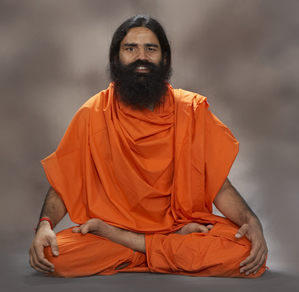
A swami, savvy bizman and man of convictions

He's a yoga guru, who fashions himself after a 'yoddha sannyasi' or warrior monk. Born as Ramkrishna Yadav in Ali Saiyadpur village in Mahendragarh district of Haryana in 1965, Ramdev's earliest influences, apart from yoga, were revolutionary writings on the lives of Ram Prasad Bismil and Subhas Chandra Bose.

He learnt the value of pranayam when it cured him of the disabling effects of a paralytic stroke he got as a child. His faith in curative nature of yoga enhanced, Ramdev defined 'swasthya swavalamban' — self-reliance in health — as the centrepiece of his worldview. He says only a healthy body with a healthy mind can lead to a healthy society and nation.

But what is Ramdev's politics? Does he have an economic vision? He is a swadeshi zealot — calling him a votary would be gross understatement. An uber social conservative, he harangues foreign medicine and culture, froths at liberal views on homosexuality. At one of his congregations in Haridwar some time back, he invited a scrum of journalists to speak to a largely rural audience of around a couple of thousands in Hindi. He insists on spelling yoga as 'yog' because that's how it is pronounced.

The baba eats fruit and vegetables, drinks a lot of juice, and is lean, without a sliver of fat on his body. An engaging conversationalist, he sizes up his interlocutor with something approximating intuition. And he has a good memory.

Ramdev, unlike politicians, appears to the folk as someone strongly attached to what he feels and thinks: A man of convictions, a contrast with politicians. His ochre robe — saffron is worshipped in the heartland — make it difficult for politicians to spit at him and run, usually a safe political tactic.

But the baba, who owns a Scottish island at Cumbrae thanks to his NRI bhakta couple Sam and Sunita Poddar who bought it for two million pounds, has a savvy business side to him. While he recently said the turnover of his enterprises is around Rs 1,100 crore, sources close to him placed the worth of his entire business empire at Rs 15,000 crore.

Ramdev is the face of a multi-crore healing business in Haridwar which includes a 300-bed multi-speciality hospital, a Yoga Research Centre known as Patanjali Yogpeeth, a university, and an ayurvedic pharmacy. He is also associated with a food park known as Padarth and Yog Gram. Ramdev recently began another massive project known as Patanjali Phase-2.

ARROGANCE OF IDENTITY POLITICS

Benjamin Netanyahu’s behavior with President Obama overstepped the limits of decency and diplomatic protocol. One can disagree but one should not be abrasive and rude, more so in public in the house of the host. David Rothkofp (of Carnegie Foundation) wrote,  “ In the wake of Israeli Prime Minister Netanyahu's embarrassing and diplomatically maladroit performance at the White House on Friday and President Obama's two addresses about the Middle East in the past four days, the core questions Americans and the world confront regarding the Israeli- Palestinian dispute are thrown once again into stark relief.” Netanyahu forgot during his meeting with the US President that the US was not only the first country to recognize Israel as a sovereign and independent  country  within hours of its coming into existence but in the world today the US is perhaps the only friend that Israel can count upon in times of need. Netanyahu should have remembered that the US lost the Vietnam War despite having nuclear weapons as did France in Algeria and the Soviet Union in Afghanistan. The premise of defamed Pakistani nuclear scientist A. Q. Khan that if Pakistan had nuclear weapons then independent Bangladesh would not have emerged and India could have been deterred on the Eastern Front is fallacious and contrary to the lessons of history. Netanyahu’s excessive dependence on the Israeli lobby in the US Congress for support of Israeli intransigence, even when such support goes against the vital interests of the US as demonstrated by Professors John Mearsheimmer and Stephen Walt in their book Israeli Lobby and US Foreign Policy, is dangerous for Israel itself. They argued, “No lobby has managed to divert U.S. foreign policy as far from what the American national interest would otherwise suggest, while simultaneously convincing Americans that U.S. and Israeli interests are essentially identical.” They added that "in its basic operations, it is no different from interest groups like the Farm Lobby, steel and textile workers, and other ethnic lobbies. What sets the Israel Lobby apart is its extraordinary effectiveness." According to Mearsheimer and Walt, the "loose coalition" that makes up the Lobby has "significant leverage over the Executive Branch", as well as the ability to make sure that the "Lobby's perspective on Israel is widely reflected in the mainstream media." They claim that AIPAC in particular has a "stranglehold on the U. S.Congress", due to its ability to reward legislators and congressional candidates who support its agenda, and to punish those who challenge it. According to the New York Times Netanyahu requested the Republican leadership that he be invited to address the Joint Session of the Congress to upstage President Obama’s speech on US policy on the current situation in the Middle East and North Africa. His arrogance in challenging the American President who is ultimately charged with framing US foreign and security policy that would serve American interest is beyond comprehension. Equally incomprehensible is the comment by possible Republican presidential nominee Mitt Romney ( National Review, February issue) that “Israel must now contend with the fact that its principal backer in the world, the United States, is seeking to ingratiate itself with Arab opinion at its expense.”  Some similarity can be found in the intense rivalry between the two political parties in the US- --Republican and Democrat¬-- -and the two main parties in Bangladesh engaged in a gladiatorial contest for power. While our political parties  display  intense discord on almost all issues the American political parties, having centuries of  practice of democratic norms, are more mature and tolerant of opposite views. Some Republican leaders assured Netanyahu that a Republican Congress would act to contain the Obama administration’s policy on Israel “favoring” the Arabs. By making such promises the Republican leaders run the risk of putting pressure on the US administration in adopting policies that may ultimately harm the US interest in the Islamic world. As it is Pew Research Center reports indicate decreasing US popularity in the Islamic world, partly due to US policy on the Palestine issue and partly due to a suspicion that the influence of persons like the Paul Wolfowitz-Richard Perle variety have not withered and continues to sway US policy on various matters. John Mearsheimer (Imperial by Design-The National Interest- Dec 2010) writes that abundance of survey data and anecdotal evidence show that anger and hatred against the US among the Arabs and Muslims is largely driven by Washington’s policies on Israeli treatment of Palestinians, presence of US troops in Saudi Arabia after the 1991 Gulf War, US support for repressive regimes in the Arab world, etc. Mearsheimer cites  the case of Khalid Sheikh Mohammed, the mastermind of 9 /11 , as expressed by the 9 /11 Commission: “By his own account KSM’s animus towards the US stemmed not from his experiences there as a student, but rather from his violent disagreement with the US foreign policy favoring Israel.”   The Arab Spring has amply demonstrated that Israel is not the only democratic country in the sea of autocracies and that George W Bush’s policy of threatening the Arabs with democratization was unnecessary and the idea of “ Arab Exceptionalism” was erroneous. While Al-Qaeda is universally despised, and no less in the Muslim world,  and its philosophy is totally rejected, the Western world should pause to think why Pakistan despite being the recipient of billions of dollars of US assistance, considers the US as the top on the enemy list even above India, the  traditional enemy. No thinking person believes that Israel should be destroyed, and even the most anti-Semite would know it is a military impossibility. Arabs, indeed the entire Muslim world, would like to have normal relations with Israel. The impediment lies in the mindset of people like Netanyahu who refuse to believe that peace cannot be achieved through conquest and repression.   President Obama is indeed an exceptional leader who is thoughtful, benign, and modest. His “subversion” of Pakistani sovereignty in the raid that killed Osama bin Laden and drone attacks is to safeguard the global interest against terrorism. Regarding Arab Spring David Rothkopf writes, “He is different from his predecessors in that he feels more kinship with people of the region as a whole and does not see it as a cartoonish world of good and evil or of a few leaders standing  in the place of whole nations. He recognizes that he is living at a pivotal time not only in the history of Middle East but also in the history of the US foreign policy.”   One hopes that the American people would rise above the calumny of the so-called Muslim Problem disseminating the idea of Muslims spreading the contagion of terrorism in an otherwise prosperous Western civilization and demand that justice be done to a people oppressed for decades by a few who themselves were victims of holocaust perpetrated by a madman and of repression in centuries past.

Thursday, June 2, 2011

CONGRESS CORE GROUP MEETS TO DISCUSS RAMDEV'S AGITATION

New Delhi: Congress top brass, including Prime Minister Manmohan Singh and party chief Sonia Gandhi, are expected to deliberate, Thursday, on the situation arising out of yoga guru Ramdev's plans to go on a hunger strike on the issue of black money here from June four. A meeting of the Congress Core Group headed by Gandhi has begun at PM’s residence, 7 Race Course Road, in the backdrop of apparent differences between the party and the government over the way the issue needed to be tackled. The Core Group, which generally meets on Friday is meeting a day ahead, reflecting the concern in the party and the government over Ramdev's plans. Top Congress leaders and senior ministers, including Pranab Mukherjee, A K Antony, P Chidambaram and Political Secertary to Congress chief Ahmed Patel are part of the group which decides on major policy issues. Importantly, the Prime Minister and Sonia Gandhi held separate talks before the meeting of the entire Core Group. Meanwhile, Baba Ramdev has cancelled a press conference scheduled this evening in view of " serious dialogue" with government. His aides notified the media about the cancellation of the press conference at Ramlila Maidan, where he is to sit on fast from Saturday, saying the yoga guru would update the media about " conclusive" outcome tomorrow. Earlier in the day, Ramdev held a meeting with his close associates here to finalise the strategy ahead of his proposed June 4 hunger strike on black money issue and talks with the government which wants him to call off the agitation. 

The yoga guru maintained that he will go ahead with the protest from June four. A meeting of the Cabinet Committee on Political Affairs was held a few days back to discuss Ramdev's fast and Singh had also written a letter to the yoga guru asking him not to go ahead with the fast, promising him to find a " practical and pragmatic" solution to tackle the issue of corruption. Congress has distanced itself from the government's unprecedented step of sending four senior ministers to receive Ramdev at the airport here in a bid to persuade him not to go ahead with the protest saying it was "unnecessary" and the party has "nothing to do" with it. "The party is not at all related to this entire exercise from here to the airport (ministers going to the airport to receive the Yoga Guru)," top sources in the Congress said.

What Baba Ramdev wants
 Special Correspondent Yoga guru Baba Ramdev, who has threatened to field candidates in every Lok Sabha constituency in 2014, has stopped the Union government in its tracks with a set of demands, ranging from the serious to the bizarre.
The demands of the jetsetting Baba — whose acolytes recently bought him a little Scottish island to open an ashram — include:
— Tough Lokpal Bill, with a provision for death sentence for the corrupt, especially corrupt officials
— Immediate return of all black money stashed away in tax havens abroad to the country
— Declaring all wealth in foreign countries being held illegally by Indians as national property and charging those with such accounts under the sedition laws
— Abolishing Rs.1,000 and Rs.500 currency notes
— Disabling the operations of any bank which belongs to a country that is a tax haven
— Replacing the British-inherited system of governance, administration, taxation, education, law and order with a swadeshi alternative
— Reforming the electoral system to ensure that the Prime Minister is directly elected by people
— Ensuring that all citizens declare annually their incomes
— Bringing income-tax details under the Right to Information Act
— Increasing substantially the Minimum Support Price of grains
— Making wages of different categories of labourers uniform across the country
— Revoking the Land Acquisition Act, as farmers should not be deprived of their land for industry
— Promoting Hindi at the expense of English.

THE CRIMES OF RAKTO MLADI

Ratko Mladić is an easy man to hate. In his prime, he not only talked and behaved like a thug, but he also looked like one – the kind of bull-necked, pale- eyed, snarling psychopath who would gladly pull out your fingernails just for fun. Apart from many other cruelties, the Butcher of Bosnia was responsible, in the summer of 1995 , for the killing of around 8 ,000 unarmed Bosnian Muslim men and boys in the woods around Srebrenica. So it will give most of us a feeling of warm satisfaction that he has finally been arrested in the Serbian village of Lazarevo. Serbia has gained respect by arresting Mladić, which should speed up its membership in the European Union. The former victims of Mladić’s Bosnian Serb forces will feel that some justice is being done at last. Yet the forthcoming trial of Ratko Mladić raises certain uncomfortable questions. Why, in the first place, can’t he be put on trial in Belgrade, instead of The Hague? And is it really wise to charge him with genocide, as well as crimes against humanity and war crimes? Both questions reveal how much we still live in the shadow of the Nuremberg Tribunal, where the Nazi leaders were tried by an international judicial panel.

It was believed, perhaps correctly, that the Germans would be incapable of trying their own former leaders. And the Nazi crimes had been so horrendous in scale and intent that new laws – “crimes against humanity” – had to be created to try those who had been formally responsible for them. States, too, should be held accountable for their deeds – hence, in 1948 , the Convention on the Prevention and Punishment of the Crime of Genocide. The Holocaust was not the main issue at stake in the Nuremberg Trials. Nevertheless, the allies thought that the Nazi project of exterminating an entire people called for an entirely new legal approach, to ensure that such an atrocity would never happen again. The problem with genocide, as a legal concept, is that it is vague. It refers to “ acts committed with intent to destroy, in whole or in part, a national, ethnical, racial, or religious group.” The emphasis is on “intent,” not on the numbers of people whose lives are destroyed. Mao Zedong murdered up to 40 million Chinese, but did he intend to destroy them as a group? Surely not. 

We know that Hitler did intend to destroy every last Jewish man, woman, and child. Even though mass killings are not rare in history, Hitler’s extermination plan was, if not unique, certainly highly unusual. However, the laudable effort to prevent such a thing from recurring has had unfortunate consequences. For, in our zeal to learn lessons from history, we often learn the wrong ones, or distort history towards dubious ends. In a way, the killings at Srebrenica also were affected by the memories of World War II. The United Nations’ Dutch battalion promised to protect the Muslims there, even though it was in no position to do so. It was a promise that partly reflected the feeling of guilt that still haunts the Dutch for looking the other way as the Germans rounded up and deported two-thirds of their country’ s Jewish population to death camps. 

This time, it would be different. This time, they would act. Alas, outnumbered and outgunned by Mladić’ s forces, the Dutch surrendered Srebrenica to its fate. Because of the trauma of Hitler’s intention to murder all of the Jews, genocide has become the one compelling reason for military action, including armed invasion of other countries. But what constitutes genocide? Bernard Kouchner, the founder of Doctors Without Borders, wanted the world to intervene in Nigeria in 1970 , because he saw the killing of Ibos by Nigerian troops as a genocidal echo of Auschwitz. Others saw a brutal civil war, and cautioned that intervention would make things worse. For some, we are forever living in 1938 , or rather, 1942 , when the Nazis approved what Hitler called “the final solution of the Jewish question.” President George W. Bush and his cheerleaders, invoking the Munich Agreement at every opportunity, regarded the terrorist attacks of September 11 , 2001 , as a call to arms. Saddam Hussein was Hitler, so we had to send in the troops. We should stop Sudan’s Omar al-Bashir’s genocide in Darfur. We must stop Col. Muammar el- Qaddafi from committing mass murder in Benghazi. And so on. Sometimes intervention might save lives. But wars often beget more wars, or longer ones. Military action can cause more violence, and more civilian deaths. 

This is especially true of intervention in civil wars, where the sides cannot easily be divided into victims and aggressors, good and evil. Of course, the world becomes much simpler if we choose to see it in black and white. And the Mladić trial will, no doubt, encourage this perception. He will be tried for genocide, because the UN’s tribunal for ex-Yugoslavia and the International Court of Justice decided that the Bosnian Serbs were genocidal. Since his subordinate, Radislav Krstić, was already sentenced for his complicity in the genocide at Srebrenica, Mladić will presumably be convicted. We need not feel sorry for Mladić. There is no doubt that he is guilty of serious war crimes. And a trial, however unsatisfactory, is in most cases still to be preferred to an assassination. But trying him for genocide, even though it will be hard to prove that he ever intended to exterminate Bosnian Muslims as a group, just because they were Muslims, will further muddy the term’s already vague definition. Mladić was engaged in ethnic cleansing, which, though reprehensible, is not the same as genocide. Loose definitions will encourage more military interventions, thus more wars. By invoking Hitler’s ghost too often, we trivialize the enormity of what he actually did.

PC(USA) Opens Doors to Gay Ministers, But is Anyone Following?

For three decades pro-gay factions within the Presbyterian Church (USA) have pressed for the ordination of homosexual church officers. This time they’ve carried the day, with a majority of presbyteries now voting to amend the PC(USA) Book of Order to permit sexually active gays and lesbians to be ordained.
Prior to the amendment, the Book of Order directed the governing bodies of presbyteries (regional organizations of the denomination) to ordain as deacons, elders, and ministers only those who lived “a life of obedience to Scripture,” whether in single “chastity” or married “fidelity.” Those “persons refusing to repent of any self-acknowledged practice which the confessions call sin” should not be ordained.
The newly passed Amendment 10-A removes this language and directs the governing bodies simply to be “guided by Scripture and the confessions in applying standards to individual candidates.” The presbyteries are not compelled to ordain non-celibate homosexuals, but they are no longer forbidden to do so, just as they are no longer forbidden to ordain heterosexuals who are sexually active outside of marriage.
The denominational debate about homosexuality, and related issues of biblical interpretation and authority, has been going on ever since Northern and Southern Presbyterians joined to form the PC(USA) in 1983. The debate grew so intense that the denomination declared a three-year moratorium on the subject in 1993. Conservatives won a victory in 1997 when they successfully added the “fidelity and chastity” requirement. Ever since, liberal Presbyterians have proposed a series of possible substitutes that would permit gay ordination. While those proposals were defeated every time, the margins of defeat grew progressively smaller—until May 10, when the Twin Cities presbytery in Minnesota gave the new ordination standards majority support among presbyteries. The new rule will take effect on July 10.
Bruce Reyes-Chow, moderator of the PC(USA)’s General Assembly from 2008 to 2010, said he could “weep with joy for friends long yearning for this day.” Presbyterians for Renewal, a group devoted to strengthening the denomination’s commitment to biblical authority, expressed “unspeakably deep grief.” Some noted that the earlier standards called for “a life of obedience to Scripture,” whereas the new standards only ask the governing bodies to “be guided by Scripture.” As author and minister Mark D. Roberts wrote, “Guidance implies far less than obedience,” and viewing the Bible as only as a source of guidance “appears to put Scripture on a par with other sources of guidance.”
The amendment to PC(USA) ordination standards occurs against the backdrop of a long numerical decline. The denomination has lost one-fifth of its membership in the past decade, and four out of five worshippers in its pews today are over the age of 45. At the same time, the movement for gay ordination across Christian denominations may be slowing down. Although many mainline denominations have opened the doors to homosexual priests and pastors, no other denominations are waiting in the wings to follow their lead. There is no obvious next battleground for this fight.
For the Presbyterian Church (USA), the battle will now shift to individual presbyteries as they will decide for themselves whether or not to ordain gay candidates, as renewal movements will continue to protest. The Fellowship PC(USA), a nascent movement led by prominent Presbyterian traditionalists, stated tartly, “We as a Fellowship choose to remain obedient to Scripture and guided by theBook of Order.”
Publication date: May 27, 2011

US Muslims will double by 2030: study


American MuslimsTHE number of Muslims in the United States is expected to increase from 2.6 million in 2010 to 6.2 million by 2030.

The rise will in large part be because of immigration and higher-than-average fertility among Muslims, according to a study.

According to Pew Research, the Muslim share of the US population (adults and children) is projected to grow from 0.8% in 2010 to 1.7% in 2030. The rise will make Muslims roughly as numerous as Jews or Episcopalians are in the United States today.
“Although several European countries will have substantially higher percentages of Muslims, the United States is projected to have a larger number of Muslims by 2030 than any European country other than Russia and France,” Pew Research reported.
About two-thirds of the Muslims in the US today (64.5%) are first-generation immigrants, while slightly more than a third (35.5%) were born in the U.S. By 2030, however, nearly half of the Muslims in the U.S. (44.9%) are expected to be born here.
The top countries of origin for Muslims in the US are Pakistan and Bangladesh, according to a study by Pew Research Center.

Algerian sent to jail for sharing faith with neighbor

An Algerian Christian has been sentenced to five years in prison for sharing his faith with his neighbor.
According to International Christian Concern, Siagh Krimo was given the sentence last week in Djamel District, Oran, Algeria.
Krimo was charged of proselytizing after his neighbor made a complaint, and accused him of making defamatory statements against the Islamic prophet Muhammad.
He was sentenced under Article 144 bis 2 of the Algerian Penal Code which makes it a criminal offence to ‘insult the prophet’ or ;denigrate the creed and precepts of Islam.’
Aidan Clay, ICC Regional Manager for the Middle East, said: “Algerian Christians have been under attack in recent weeks as laws have been increasingly enforced to discriminate against them.
“While Algeria professes that it upholds religious freedom, it also embraces a blasphemy law that, by its very nature, can be used to prosecute anyone who does not adhere to the religion of Islam.
“We urge Algeria to acquit Siagh of all charges and repeal Article 144 bis 2 of the Penal Code.”
Krimo, who is a husband and father, now faces the bleak prospect of spending the next five years in prison, unless he managed to stage a successful appeal against the judgment. According to ICC, Krimo has 10 days to appeal the sentence.

Does ‘Replacement Theology’ play a role in anti-Israel behavior?

HARSH criticism directed towards Israel from among some Protestant, Catholic and Orthodox communities raises the question if they believe in the ‘Replacement Theology’.
Replacement theology, which is also referred to as Supersessionism, endorses the belief that Christianity or the “church” has replaced the Jews and Israel.
So, what does the Bible say?
In Genesis 15:18 God promised Abraham the land. Then in Genesis 17:7-8 and 17:19 the Lord gave Abraham His “everlasting covenant” which included blessing Abraham, his seed born from Sara, and to be their God.
The same covenant was confirmed to Abraham’s son Isaac in Genesis 26:3-4.
Next God established His covenant with Abraham’s grandson (Isaac’s son), Jacob in Genesis 28:13-15. Jacob was renamed Israel by God in Genesis 35:10.
Later, God reconfirmed the exact same covenant to Jacob (also called Israel) and to his seed in Genesis 35:12. Sons of Jacob (Israel) include Judah and generations later Jesus Christ was born from Judah’s family.
They all lived, as instructed by God (Genesis 12:1-3) in the land known today as Israel which bears the name God gave Jacob.
But does God guarantee His promise to the Jews and Israel despite the division (of Jesus Christ as Messiah) between Christianity and Judaism?
Old Testament prophecies have several examples of how God, near the end times, will forgive, bless, protect and avenge His chosen Jews (and Israelites).  For example in Jeremiah 31:31-34, “Behold, the days come, saith the Lord, that I will make a new covenant with the house of Israel, and with the house of Judah:”
Then the Lord elaborates, “But this shall be the covenant that I will make with the house of Israel; After those days, saith the Lord, I will put my law in their inward parts, and write it in their hearts; and will be their God, and they shall be my people. And they shall teach no more every man his neighbor, and every man his brother, saying, Know the Lord: for they shall all know me, from the least of them unto the greatest of them, saith the Lord: for I will forgive their iniquity, and I will remember their sin no more.”
The Lord God repeats His prophetic promise in Ezekiel 39:25-29.
More confirmation is in Zachariah 8:23 “Thus saith the Lord of hosts; In those days it shall come to pass, that ten men shall take hold out of all languages of the nations, even shall take hold of the skirt of him that is a Jew, saying, We will go with you: for we have heard that God is with you.”
Additional testimony which extends into the future is in Isaiah 14:1, 49:3-23, Jeremiah 16:14-15, Ezekiel. 36:1-15, 36:21-38, 37:1-14, and other verses in Joel and Zachariah.
Moreover, New Testament scripture comprehensively confirms the Jews and Israel are chosen by God and Jesus Christ, who is also referred to as ‘King of the Jews’, (Matthew 2:1-2, Luke 23:38), and contains warnings against arrogant (Gentile) Christian behavior.
Verses in Matthew 15:24, John 4:22, Romans 1:16-17, 9:4, 11:1-5, 11:16-21, 11:26, 11:29, Revelation 7:3-8, 12:13-17 and the description of New Jerusalem in Revelation 21:12 plainly describe the special place both the Jews and Israel have with the Lord.
God has made it perfectly clear. The Bible effectively verifies that the Jews are God’s chosen people and Israel is God’s chosen land. Prophecy as well affirms that the Jews, Israel and the Lord God will be reunited in their unbreakable bond.
Also, the Bible plainly states that Jesus Christ is Jewish (Hebrews 7:14), Jesus has a Royal Jewish birth line, He was born in Israel (John 7:42 and Micah 5:2) and in the latter days God will again bless His chosen people and their country Israel.
Thus, if a Christian from any domination believes the Bible is the concrete, protected Word of God yet dislikes Jews and maligns Israel, they might be in for a terrible shock at the Judgment Seat of Christ
Furthermore, rejection of the Jews and Israel might be the very cause of the tribulations and turmoil occurring in many churches, denominations and individuals’ lives.
As a result, Christians should be extremely wary of distorting what God chooses, does, says and promises.
Particularly, if individuals are using their Christian authority to spread their intolerance against God’s chosen people and land, and against Jesus Christ’s bloodline and birthplace.

Wednesday, June 1, 2011

Gaza: America is the enemy of Allah

Gaza: America is the enemy of Allah
It has already been reported that while much of the Middle East was pleased with Osama bin Laden's assassination by American forces, the Palestinian Arabs stood out as the only regional group to oppose the elimination of the arch-terrorist.

Recent rallies in the Hamas-ruled Gaza Strip have revealed just how much Palestinian Islamists idolized bin Laden and how broad was his popularity on the "Palestinian street."
During the various rallies, the standard chants of the thousands of attendees have been: "Bin Laden Shattered Crosses" (speaking to their hatred of Christianity) and "America is the Enemy of Allah."
At one rally, Hamas leader Sheikh Munir Al-Aydi eulogized bin Laden by praising the latter's dedication to "lead the global jihad against America and its allies, the worshippers of the cross."
Western leaders have for the past decade been trying hard to equate Christianity with Islam and the God of the Bible with Allah. They are adamant that there is no religious war taking place.
But the Palestinian Islamists clearly do not agree.
In light of these dangerous delcarations by Hamas leaders, it is important to once again call out Western leaders who insist that Hamas be made part of the diplomatic peace process with Israel.
Not only does Hamas continue to refuse to recognize Israel's right to exist, but it openly advocates the teachings of terrorists who want to impose Islamic law on the entire world.
Source : Israel Today

Netanyahu on Jerusalem Day: This city is ours!

Netanyahu on Jerusalem Day: This city is ours!
As Israel marked the 44th anniversary of the reunification of Jerusalem on Wednesday, Prime Minister Benjamin Netanyahu insisted that Israel would never allow the city to be again divided.
"Forty-four years ago, IDF soldiers realized the prophets' vision and returned Jerusalem to its proper place," Netanyahu said, referring to the liberation of the eastern half of Jerusalem during the 1967 Six Day War.
Speaking at Jerusalem's Merkaz Harav Yeshiva, which has long been at the forefront of religious Zionism, Netanyahu continued:
"Jerusalem will never be divided. There's nothing more holy to us than Jerusalem, we'll protect Jerusalem, it's unity, and we'll build and develop it."
US President Barack Obama and other Western leaders have been pushing hard to restart Israeli-Palestinian peace talks based on Arab demands that Israel return to its pre-1967 borders.
For its part, the Palestinian leadership insists it will never sign a peace deal with Israel that does not include the full surrender of the eastern half of Jerusalem, including the Temple Mount.
But a Jerusalem Day poll revealed that a strong majority of Israelis remain firmly behind Netanyahu's policies, and do not agree to divide Jerusalem even as part of a comprehensive peace agreement.
Conducted by the Geocartography Knowledge Group on behalf of Israel's Channel One News, the survey showed that 66 percent of Israelis oppose handing over any part of Jerusalem to the Palestinian Authority.
A 23 percent minority said they would be willing to surrender Jerusalem's Arab neighborhoods, a compromise the Palestinian Authority has already rejected.
An even larger 73 percent majority opposed placing Jerusalem's holy sites under international control, a proposal that first came up during former US President Bill Clinton's oversight of the peace process.
Rather than talk about how to divide Jerusalem, 67 percent of Israelis want to simply get on with building up and developing the city as the capital of Israel.