Monday, July 11, 2011

India Briefs: Recent Incidents of Persecution

Pastor Johnny Lazarus, 50, was beaten by Hindu extremists on June 28 at Bollepally village in Bhongir Mandal. The All India Christian Council (AICC) reported that one extremist, Malla Reddy, accused Pastor Lazarus of performing witchcraft on him. Reddy and his family members verbally abused the pastor and his faith, saying, “You brought a low-caste god among us,” slapped him and threatened to harm him further if he did not leave the area immediately. The pastor reported the attack to police and to the AICC. Police officers summoned both parties on July 1, and the attackers apologized to the pastor, putting into writing that they would not disturb him again. The pastor forgave his assailants.

Karnataka – Police on June 28 arrested two Christians after Hindu extremists from the Bajrang Dal attacked Pastor M. Sandeep and a man identified only as Isaac as they were returning home from a prayer meeting in Heggere, Hubli. The Global Council of Indian Christians reported that at about 11 a.m. the extremists rushed the Christians and began questioning them, accusing them of forceful conversion. They searched their bags for Christian literature, slapped them and verbally abused them. The extremists then took the Christians to the Old Hubli police station, where they were detained for about six hours. Thereafter police filed charges for hurting religious sentiments, violation of private property and unlawful coercion. The Christians appeared before a judge and were later sent to Dharwad Jail.

Karnataka – On June 28 in Shimago, state officials verbally ordered the cancelling of permission for a Christian school to operate after Hindu extremists from the Bajrang Dal and Rashtriya Swayamsevak Sangh urged authorities to do so. The extremists accused Good Shepherd Community School officials of forceful conversion. The All India Christian Council reported that the school, belonging to Operation Mercy India Foundation, educates people of all faiths. Area Christian leaders were taking steps to resolve the conflict, with villagers supporting S. Prakash, community development officer of the school. Tensions prevailed in Shimoga as people awaited written notice cancelling the school’s permission to operate.

                       
Karnataka – Police arrested four tribal Christians after Hindu extremists accused them of forceful conversion on June 21 in Badragola village, Virajpet. The Global Council of Indian Christians (GCIC) reported that the Christians – three of whom were identified by their single names of Mani, Agela and Ravi – were detained at the police station for about five hours without food and water. They later appeared before a Virajpet judge, and the Christians were released on bail the same day with the intervention of area Christian leaders. The GCIC reported that the area Hindu extremists were jealous of improvements in the tribal Christians’ lives after they received Christ.

Chhattisgarh – Hindu extremists from the Bajrang Dal on June 19 disrupted worship and threatened to harm Christians if they continued meeting in Gurur, Durg. The Global Council of Indian Christians reported that the extremists led by Narayana Teke stormed into the Sunday worship meeting, took pictures of the congregation and ordered the Christians to leave the building. Pastors Mohan C. Thomas and Anish C.K. went out to meet the furious mob, and the extremists then warned them to leave the area altogether.


Tamil Nadu – On June 12 in Karaikal, Puducherry, Hindu extremists from the Rashtriya Swayamsevak Sangh threatened a Christian identified only as Pastor Robinson and members of the Church of Jesus. The extremists warned the Christians that they would be harmed if they continued to hold worship services. Pastor Robinson works as a manager in a Christian school and also leads a church of 100, reported the All India Christian Council. About 50 extremists stormed into the Sunday worship meeting and threatened the pastor and others with knives, warning them to cease all Christian activities. Pastor Robinson and local Christians submitted a memorandum to the district collector asking authorities for protection.

Surgery to change sex to female infants: condemned by the Church

http://www.sxc.hu/pic/m/j/ju/just4you/1281126__baby_boy__2.jpg"We have strongly condemned, as Indian bishops, this horrible practice of surgery to change sex of female infants” explained Fr. Charles Irudayam, Secretary of the "Committee for Justice, Peace and Development" of the Episcopal Conference of India in an interview with Fides on Thursday. It is the result of a mindset that favors male as a source of profit and as a son of greater value. What has taken hold in the state of Madhya Pradesh (central India) is an aberrant phenomenon: cases in which doctors practice surgery to change sex of female babies multiply, at the request of parents who favor males. The state government has launched an official investigation to stop the practice, known as "genitoplasty", which has already seen 300 cases of girls under the age of one year operated in the city of Indore. The cost of the surgery is the equivalent of about $ 3,200, and the emergence of this phenomenon has made Indore city a destination for families from other states, like New Delhi and Mumbai. Activists and human rights organizations have defined the practice as "shocking" and the National Commission for Child Protection has asked the government for stricter measures to block it mortifying the dignity of women", A lot needs to be done – just like what the Church is doing - to spread a culture of equality and to promote the dignity and the rights of women in society. Fr. Anand Muttungal, spokesman for the Council of Bishops of Madhya Pradesh, told Fides: "The preference for males is still a strong factor in the families of the Hindu faith, the belief is that to have salvation you need a son.. In India there are about 500 million women, out of a population of over one billion people. Since independence the state has enacted laws to protect the rights of women, but gender inequality is still an open issue. According to data from the NGOs, the infant deaths of females exceed the males by more than 300 thousand units per year, because of the privilege given to males also in nutrition. Women suffer discrimination in childhood, then in access to education, in employment and in all sectors of society.

Vatican delegations hail South Sudan

For the first time Saturday the newest nation of the world raised its flag and the newest president Salva Kiir took the oath of office in the presence of Ban Ki-moon, UN Secretary –General flanked by world leaders, sparking wild jubilant cheers from the crowds The 193rd country recognized by the United Nations and the 54th U.N. member state in Africa was a reality. Pope Benedict XVI joined the chorus in wishing the new state “peace and prosperity”. For this solemn occasion, the Holy Father’s official delegation was headed by Cardinal John Njue, archbishop of Nairobi and president of the Kenya Episcopal Conference. It included also Archbishop Leo Boccardi, apostolic nuncio to Sudan, and Msgr. Javier Herrera Corona, secretary of the apostolic nunciature to Kenya, who gladly toasted the new nation, many of whose citizens are Catholic.

Sunday, July 10, 2011

Annual retreat of priests concluded in the Holy Land

The annual retreat for priests of all rites concluded in the Holy Land on Friday. “ Lectio Divina” or spiritual reading for the priest today” was the theme of the retreat that began July 2nd Saturday . This practice goes back to 1993, when as a fruit of the local pastoral synod, Bishops and Priests felt the need of strengthening ecclesial communion by sharing certain pastoral initiatives. Among the retreatants were Patiarch Fouad Twal, Bishops Elias Shacour, Paul Sayyah, Giacinto Boulos Marcuzzo, Kamal Bathish and 45 priests from various religious communities. Fr.Najib Ibrahim, was the recource person for Scripture, assisted by other priests, biblical scholars. Each day opened with a conference on the Apostolic Exhortation Verbum Domini, followed by reflections on the spiritual reading of the bible, in the life of the Church and of priests, and in inspiring vocations. The retreatants were taken on excusrsions to the Mount of the Beatitudes, to Caphernaum, Tiberias, and to the lakes of Genesareth and Galilee.

Nomination of Papal legate to Jubilee of Our Lady of the Angels

http://www.interfaithmary.com/images/book/cartago.jpgThe Vatican announced Saturday that Pope Benedict XVI has nominated Cardinal Francisco Robles Ortega , as his special legate to the closing celebration of the 375th anniversary of the finding of the image of Our Lady of the Angels, patroness of Costa Rica. The image of Our Lady of the Angels is only about three inches high, and is carved in a simple fashion on dark stone. She has a round, sweet face, slanted eyes and a delicate mouth. Her coloring is leaden, with scattered golden sparkles. She carries the Christ Child on her left arm. Only the faces of Mary and the Child are visible; the rest is covered by a cloak that is gathered in pleats. The closing jubilee ceremony will take place at Cartago, Costa Rica, on August 2nd 2011. The story goes that while searching for firewood on 2nd August 1635, the feast of the Holy Angels, a poor mestizo woman named Juana Pereira discovered this small image of the Virgin sitting beside the footpath near Cartago, Costa Rica. Juana took it home. The next morning she found that the statue was not there but back at the rock, so she took it to the priest and he locked it in a small box. The next morning the statue was back at the rock. During the construction of the church to house the image, the site was destroyed by earthquakes so many times, it was finally decided to move it to the location where the statue was originally found and they were able to finish construction. Many people think that the earthquakes were signs that the Lady of Los Ángeles wanted the basilica built there. The original statue is kept in a golden shell inside the basilica. An official decree declared the Virgin of the Angels the official patroness of Costa Rica.

Egyptian Court rules in favour of Christian Converts

Egypt’s Supreme Administrative Court recently ruled in favour of anyone wanting their religious registration officially changed back to “Christian”, according to Middle East Concern.

The new ruling affects those who were registered as “Christian,” but whose registration was changed to “Muslim”; this change can happen when an adult converts to Islam, or when a parent changes their children’s registration, or because of clerical error.

The court also criticized the Ministry of the Interior for not implementing its previous rulings and instructed government officials to implement the new ruling without further delay.

Back in 2008, some Christians were permitted to change their religious registration from “Muslim” to “Christian,” but Egyptian authorities refused to cooperate on the grounds that it was impractical to implement. However, after the court affirmed its initial ruling, the State Council of fatwas blocked it, claiming each individual had to file a separate case. But now, all citizens with the appropriate documentation have the right to officially change their religious registration.

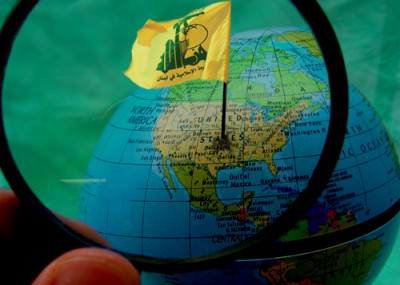
House Hearing: Hizballah Threat Looms in U.S. Backyard

Pope: No to RH, divorce

The Catholic Church’s campaign against the Reproductive Health (RH) and divorce bills got a big boost after Pope Benedict XVI rallied behind the efforts of bishops to defend the value of human life and sacredness of marriage.
“His Holiness prays that this time for reflection and renewed dedication in the service of the Gospel will bear abundant fruit for the Church and the society,” read the message of the Pontiff to Philippine bishops currently attending their 103rd Plenary Assembly in Paco, Manila.
“He encourages the bishops in their efforts in defense of the value of each human life, of the sacredness of marriage, and of the family,” it further read.
The Pontiff’s letter addressed to CBCP President Tandag Bishop Nereo Odchimar was signed by Vatican Secretary of State Cardinal Tarcisio Bertone.
Odchimar had earlier said that the issue of the RH bill will be included in their bi-annual gathering.
“We will be discussing that because that is the present burning issue and we have to speak out on that,” he said in an interview with reporters.
“We are the last bastion standing against the RH bill, divorce, and now there is also the possibility of same-sex marriage and we won’t be surprised if after that would come euthanasia,” added Odchimar.
The Catholic Church has been opposing the RH bill convinced that it is anti-life and family due to its promotion of artificial contraceptives as a family planning method.
The Church is also against the introduction of divorce in the country for it destroys the marriage bond.
As of Saturday morning, 89 bishops, out of the 138 members of the CBCP, were present during the Plenary Assembly.

Among them are the bishops allegedly involved in the so-called “PCSO fund mess” namely; Cotabato Archbishop Orlando Quevedo, Butuan Bishop Juan De Dios Pueblos, Bangued Bishop Leopoldo Jaucian, Basilan Bishop Martin Jumoad, and Bontoc Bishop Rodolfo Beltran.
The PCSO had earlier accused some bishops of receiving donations and sports utility vehicles (SUVs) from then President and now Pampanga Rep. Gloria Macapagal Arroyo allegedly for political patronage.
Expect greater opposition from the Catholic Church when it comes to the issue of the Reproductive Health (RH) bill and divorce bill when Congress resumes its session on July 25.
This after the fight of the Catholic Bishops’ Conference of the Philippines (CBCP) against the said bills got a boost from no less than Pope Benedict XVI himself.

Saturday, July 9, 2011

Bangladesh: Protect Women Against ‘Fatwa’ Violence

Despite Court Orders, Government Has Failed to Intervene

The Bangladesh government should take urgent measures to make sure that religious fatwas and traditional dispute resolution methods do not result in extrajudicial punishments, Human Rights Watch said today. The government is yet to act on repeated orders of the High Court Division of the Supreme Court, beginning in July 2010, to stop illegal punishments such as whipping, lashing, or public humiliations, said the petitioners who challenged the practice.

These private punishments significantly harm women’s and girls’ lives and health. Instead of intervening and taking active measures to prevent these abuses, the Bangladesh authorities have been mute bystanders.
Aruna Kashyap, Asia women’s rights researcher at Human Rights Watch
In 2009 Ain-o-Salish Kendra (ASK), Bangladesh Legal Aid and Services Trust (BLAST), BRAC, Bangladesh Mahila Parishad (BMP), and Nijera Kori, brought a public interest case. They challenged the authorities' failure to address extrajudicial punishments imposed by shalishes - traditional dispute resolution methods - in the name of fatwas, opinions that are supposed to be issued by Islamic scholars. These punishments include whipping, lashing, publicly humiliating women and girls by forcibly cutting their hair or blackening their faces, ostracizing women, girls, and families, and imposing fines. While many of these incidents go unreported, ASK has assembled news reports of at least 330 such incidents in the last 10 years.

"These private punishments significantly harm women's and girls' lives and health," said Aruna Kashyap, Asia women's rights researcher at Human Rights Watch. "Instead of intervening and taking active measures to prevent these abuses, the Bangladesh authorities have been mute bystanders."

The issue became especially urgent when a shalish in Shariatpur district in the Dhaka division ordered 100 lashes in January 2010 for Hena Akhter, an adolescent girl, for an alleged affair, though by most accounts she had reported being sexually abused instead. She collapsed during the lashing and ultimately died. Since Akhter's death, the local media has reported at least three suicides of girls following similar punishments.

The High Court division of the Supreme Court issued its judgment in the case on July 8, 2010, criticizing the Bangladesh government for not protecting its citizens, especially women, from cruel, inhuman, and degrading treatment or punishment. Saying that the punishments contravened constitutional guarantees of the rights to life and liberty, the court directed the government to investigate and prosecute those responsible and to take preventive steps with awareness campaigns in schools, colleges, and madrasas. It instructed the Ministry of Local Government to inform all law enforcement and local government officials that extrajudicial punishments are criminal offenses.

On February 2, 2011, the High Court issued an additional order directing the government to publicize as an urgent matter, through electronic and print media, that extrajudicial punishments are unconstitutional and punishable offenses. On May 12, the Supreme Court reiterated that "[n]o punishment, including physical violence and/or mental torture in any form can he imposed or inflicted on anybody in pursuance of fatwa." The court further held that fatwas can be issued only by "properly educated persons" and clarified that even where issued, they are not binding and cannot be enforced. Commenting on the Supreme Court verdict, Sara Hossain, a lawyer involved in the Supreme Court case, said that women's rights groups were relieved to see the highest court strongly condemning extrajudicial punishments in the name of fatwas. But women's rights activists in Bangladesh remain deeply concerned that the highest court had left the door open for the issuance of fatwas and the potential threats to women's rights to equality, she said.

"Akhter's public flogging and death is a stark reminder of the Bangladesh government's failure to prevent this type of violence," said Khushi Kabir, coordinator for Nijera Kori. "The High Court has been very clear that the government must stop inhumane and illegal punishments and the government's failure to do so costs lives."

Local groups that followed the case said that during the investigation of Akhter's death, doctors falsified initial autopsy reports to say that the girl's body bore no injury marks. The High Court intervened and ordered another autopsy, which reported signs of injuries. A criminal investigation is under way against those involved in Akhter's flogging as well as the doctors who fudged the initial autopsy report.

Local activists, who routinely monitor newspapers and electronic media, have said that the government has issued no public messages against extrajudicial punishments. ASK collated news reports of at least 16 such cases between January and May 2011. While Akhter died because of her injuries, ASK has found news reports that at least three other girls committed suicide because of the public humiliation they faced.

One girl killed herself, news reports say, after a local shalish in Cox's Bazar publicly flogged her in May for allegedly having an affair with her brother's friend. Another killed herself after a local shalish in Lakhipur district in April ordered her to be isolated and ostracized to punish her for an alleged affair. In January, a local shalish blackened a woman's face with coal, forced her to wear a garland of shoes, and paraded her around the village for marrying her brother-in-law long after her husband had died. Her parents later found her dead in her house and said she had committed suicide after the incident.

"The government has pledged to uphold our laws and constitution, and part of that promise is to prevent, prosecute, and punish these criminal extrajudicial punishments," said Faustina Pereira, director of BRAC Human Rights and Legal Aid Services. "There is no excuse for not acting."

In November 2010, Bangladesh was elected to the board of the international agency UN Women, assuming a new role in the international arena on women's rights. With this new role, Bangladesh should ramp up its efforts to protect women's rights in-country, Human Rights Watch said.

To end this kind of violence against women and girls, Human Rights Watch and Bangladesh human rights organizations ASK, BLAST, BMP, BRAC-HRLS, and Nijera Kori, said the Bangladesh government should immediately carry out the court orders and take the following measures:

• Initiate a massive awareness campaign against extrajudicial punishments in the name of fatwas. Among other measures the government should educate everyone in schools, colleges, and madrasas about the fact that punishments under the garb of fatwas are illegal and regularly publicize these messages through print and electronic media.
• Set up around-the-clock toll-free helplines that are easily accessible to poor rural women so they can report violence and seek emergency assistance.
• Improve access to women's shelters and safe homes in every district to ensure emergency protection for women if they face such dangers in their communities.
• Provide psycho-social support and legal assistance to those who have been punished by traditional shalishes, encouraging them to take action to hold those responsible to account.
• Monitor investigations and prosecutions into punishments imposed in the name of carrying out fatwas to ensure that the accused are punished under the law, and that effective reparations are available to victims and survivors.

Published in Human Rights Watch, New York, United States, July 6, 2011

"South Sudan will need world’s solidarity" - Vatican spokesman says

It is hoped that the war is truly over and that the new Republic of South Sudan, as desired by an overwhelming majority of its inhabitants, can start a new history in peace,” said the Holy See’s spokesman on the eve of the birth of the world’s newest state. Commenting in his weekly television programme’ Octava Dies’, Jesuit Fr. Federico Lombardi said that representatives of Pope Benedict XVI will join the United Nations Secretary General Ban Ki-Moon, many heads of state and bishops from several countries in Juba, South Sudan, on Saturday, July 9, for the proclamation of the independence of South Sudan. Southerners voted to secede from the Arab-dominated north in a January referendum that was promised in a 2005 peace deal ending 5 decades of north-south civil war that cost two million lives. The Vatican spokesman said that it will be one of the poorest countries in the world, and it will have to face very difficult problems regarding its internal unity, but its people hope – and together with them we also hope – to be able to build a future of freedom and peace. He recalled Blessed John Paul II’s visit to the Sudanese capital, Khartoum, on February 10, 1993, when the Pope expressed his closeness with the suffering people of the south displaced by war, and prayed that their freedom, fundamental human rights and human dignity be respected. Fr. Lombardi noted that the mysterious and extraordinary vitality of the Sudanese people witnessed around Pope John Paul 18 years ago hasn’t died down, but now needs the concrete and strong solidarity of the international community and of the Church in order to flourish.

Human Rights and Advocacy groups seek tougher Myanmar sanctions

More than 20 U.S.-based human rights and advocacy groups on Thursday urged President Barack Obama to expand financial sanctions against senior Myanmar officials because diplomacy has failed to bring democratic change. Washington has already imposed sanctions on scores of individuals and businesses in military-dominated Myanmar, formerly known as Burma, barring them from owning property or holding bank accounts in the U.S. The rights groups want the U.S. to take further steps allowed under 2008 legislation to prevent foreign banks that hold assets of those targeted by the sanctions from doing business with American banks. The groups also urge U.S. support for a U.N. investigation into alleged war crimes and crimes against humanity in Myanmar, where the military is accused of violent suppression of ethnic minorities in border regions opposed to its authoritarian rule.

Pope creates new diocese of Sylhet in Bangladesh

Pope Benedict XVI on Friday created a new diocese in Bangladesh appointing a bishop to it. The new diocese of Sylhet in north-east Bangladesh has been created from territories of Dhaka Archdiocese, and Oblate of Mary Immaculate Bishop Bejoy Nicephorus D’Cruze of Khulna has been appointed its first bishop. With an area of nearly 15,500 sqkm, the jurisdiction of Sylhet extends over the civil districts of Sylhet, Sunamganj, Habiganj and Moulibazar, that are home to 8.2 million people. Some 17,000 Catholics in the 6 parishes of the new diocese are cared for by 21 priests 30 nuns and 95 catechists. The parish church of Lokhipur, 100 km from Sylhet, will temporarily serve as the cathedral of the new diocese.

Sunday as 'Day of Rest' the Israel debates adding

Israel debates adding Sunday as 'day of rest'
Israel's political leadership was embroiled in a heated debate this week over whether or not to make Sunday an official "day of rest" in the Jewish state.
No, that does not mean the Jews are accepting the doctrine held by some Christians that Sunday has replaced Saturday (Shabbat) as the biblical day of rest.

Rather, Israelis are becoming tired (literally) of having a five-and-a-half-day work week (Sunday through midday Friday).

Israeli business leaders and the lawmakers who support them want Sunday to be added to the weekend, as that will mean gaining a lot of new weekend business from the Orthodox Jewish community. Orthodox Jews will not spend money on the biblical sabbath.

Business leaders involved in export businesses also argued that working on Sunday is largely pointless, since all of their Western clients and partners are not working on that day.
But Israel's Treasury countered that making Sunday part of the weekend will cost the government an enormous amount of money by requiring additional weekend overtime payments to those in the health care industry.

Instead, Finance Minsiter Yuval Steinitz suggested officially making Friday part of the weekend. Israelis are already largely unproductive on Fridays, and since Shabbat begins on Friday evening, the proposal means adding only two more hospital shifts to the weekend overtime schedule.
Steinitz's position was backed by Arab Muslim citizens of Israel, but for a different reason. Friday is the Muslim day of rest, so making it an official national day of rest makes sense, as Islam is Israel's second largest religion.
Whatever solution is eventually decided on, it seems Israelis will soon be able to take it a little more easy on the weekends.

Relations Between Israel and China getting warmer

Israel-China relations getting warmer
Relations between tiny Israel and Asian behemoth China are warming up of late, according to reports in the Israeli media this week.

Israel and China have a long history of cooperation in hi-tech fields, and business relations have been strong for some time. But now the two countries are ramping up defense and security ties, as well.

Israeli Defense Minister Ehud Barak visited China last month to bolster growing security cooperation.
Israel and China were becoming close defense partners in the late 1990s, too, with Israel selling over half a billion dollars worth of hi-tech weaponry to China every year. But that cooperation was squashed by American pressure on Israel to stop arming its communist rival. Beijin was none too pleased that Israel had caved so easily to Washington's dictates.

It is not yet clear what form this new Israel-China security cooperation will take, but what is known is that Jerusalem sees China as an important ally in solidifying its place in a sea of hostile Muslim nations.
China has enormous influence with Arab and Muslim powers across the region, and Israel hopes to leverage that in order to defuse some of the more pertinent threats facing the Jewish state.

More than Half of Norwaygians want to End Muslim Immigration

More and more Norwegians are dissatisfied with the integration policy, and 53.7 percent of respondents in a survey will close the borders to immigrants.

http://www.faithfreedom.org/wordpress/wp-content/uploads/oslo-muslims.jpgMore and more people are skeptical about immigration to Norway, the Integration Barometer 2010 , which TNS Gallup conducted for Integration and Diversity (IMDi), writes Aftenposten. Of the respondents 53.7 per cent said that the statement “We should not let more immigrants in Norway “fits very or fairly well with their own opinion. In 2005, when the survey was conducted for the first time, 45.8 percent of respondents said the same thing. While 48.7 per cent believe that the integration is fairly or very poor, there is an increase of 12 percent since 2005.

No to the police hijab Eight out of ten respondents believe that immigrants should demonstrate their Norwegian language skills through a language test before they are allowed to become Norwegian citizens. Otherwise, the survey shows that opposition to the use of hijab among women in police uniform is massive in Norway. Over 80 percent of respondents said no to this, and 3.3 percent are “very negative” to the hijab on the police.

As for Children, Equality and Social Inclusion most Norwegians believe that the study from the Directorate is not telling the whole story. - It is important to take people’s views seriously, but it is also important to emphasize that all documentation, research and statistics show that the integration is progressing, says political advisor Line Gaare Paulsen. - Norway is a tolerant society Akhenaten De Leon, leader of the Organization against Public Discrimination, says to Aftenposten that it is appropriate to question whether Norway is able to protect those who come to the country in a good way. - I am not surprised that so many are skeptical. Norway has undergone major upheaval in recent years. It has mainly gone well and I think Norway is basically a tolerant society. To me it seems natural that the Norwegians asked whether the society can tolerate the same trend, said De Leon. - Unlimited immigration is nevertheless not an end in itself. We must be sure that we have the capacity to protect those who come, he continued.

Reformation of Islam: Past, Present and Future

First and foremost, a belated Happy Independence Day to all Americans. This day is one of the most important days in the history of human civilization: the day when a country that fuels diversity, plurality, opportunity and liberty gained its independence and allowed us to experience our existence on a whole new level.

I had the opportunity to spend this past weekend at the 48th Annual Convention for the Islamic Society of North America (ISNA) and it was absolutely a rewarding experience on many levels. The theme for this year’s convention was: Loving God, Loving Neighbor, Living in Harmony. Throughout the many parallel sessions I repeatedly heard messages of peace, harmony and co-existence, which I think is an imperative and necessary message for the Muslim community to hear over and over again.

One of the topics I have been interested in is reform, and I think Professor John Esposito of Georgetown University, a non-Muslim secular scholar of Islam, assertively expressed the need for reform to the ISNA audience, emphasizing the practical non-existence of reformed theology in the Muslim world, particularly the Middle East. Now there were many thoughts that went around in my head as I experienced ISNA this year. I have been to the ISNA convention many times in the past but this was my first attendance since my declaration, and so I would be experiencing it with a whole new framework of thoughts and perception.  I remember prior to leaving Islam, as I changed my school of thought from orthodox Sunni Islam to a Rationalist-Mu’tazili ideology, which was just about two years prior to my declaration of having left Islam, I was told that this change was in of itself an act of apostasy, kufr and deviance by some of the more conservative Muslims.  The two major issues I had with Sunni Islam was its inability to reform its theological perspective as time evolved especially pertaining to specific Shariah laws that would be unjust and even inhumane in contemporary times and also in many cases its inability to embrace Scientific knowledge and discoveries such as Evolution and Determinism, for example (if Muslims were to embrace Evolution or Determinism, this would have immense impact on Islam theologically). ISNA however, on many levels presents itself to be a brand of Islam that has been able to reform American Muslims to think differently. It has not reformed Islam necessarily, but it has reformed Muslims to accept co-existence and harmony and this is a huge step in the right direction. Besides seeing Jews, Christians, Roman Catholics, Shia Muslims (Imam Qazwini), Salafi Muslims (Yasir Qadhi, Yaser Birjas of Al-Maghrib Institute), Sufi Muslims (Shaykh Maghroui , Shaykh Ninowiy), and Moderate Liberals (Tariq Ramadan) speak at different sessions at the ISNA convention but in the Bazaar I came across a booth owned by Lahori Ahmadiyya Muslims (Ahmadis split into two groups, Lahori and Qadiani, Lahoris do not believe Mirza Ghulam Ahmad was a Prophet of Allah while Qadianis who are the majority believe he was) and I also remember when I went to the ISNA convention years ago I saw a larger than life Muslims For (George W.) Bush booth!  As I reflect on this I cannot help but to be amazed that the most powerful Muslim organization in America (MSA – Muslim Students Association is directly a part of ISNA as well), is what is producing an atmosphere that would be unheard of in the Middle East. These types of speakers on the same platform not only discussing but actually living in harmony and co-existence is what the Muslim world needs to see and hear repeatedly. ISNA by the way is also the first Muslim organization in history to have a female Amir, namely Dr. Ingrid Mattson. I invited a Christian friend of mine to ISNA this year, Antonio (you can watch our YouTube video at the end of this article) who converted to Islam and left it after three years, and he too agreed with me that if the Middle East had something like an ISNA that we would begin to see a whole new type of Islam in the world. It’s actually possible too, given that figures such as Shaykh Hamza Yusuf and Imam Suhaib Webb, two prominent figures that lecture at ISNA speak fluent Arabic.

My thought is this: as an agnostic who wants peace and civility for our species, I hope and pray that Muslims are able to reform themselves and their religion. I’m not concerned about the truth of Muhammad (sa) or the Qur’an, or theological arguments for or against Islam. What I am concerned about is Muslims being able to reform their mentality and theology to the extent at which they are not trying to enforce their Aqeeda (beliefs) or Shariah (system of laws/rules) on others. When humanity is no longer intimidated by Islam (especially non-Muslims living in Muslim countries) and Muslims are actually living in peace, harmony and co-existence with the rest of us, that would be the ideal goal that I am hoping and praying for.

Now here is the reason why I do think this is possible: my generation (40 years and younger, I’m 27) has experienced plurality and diversity like never before. As a result of exposure to plurality and diversity from a young age, not only are we appreciative of differences but we even celebrate them. The baby-boomers however were brought up with a whole different mentality growing up and I submit to you that it is their mentality that is at the heart of conservativism today. I believe that when the babyboomers pass away in about another 20 or 30 years, when they relinquish their roles as world Leaders in Politics, Religion, Economics, Education, Government, Media and in society in general, and when my generation takes full control of human civilization that we will see a humanity that will be completely reformed and this includes Muslims and even Christians. More and more people are leaving religion from my generation, if not leaving religion they are adopting liberal religious perspectives, and the following generations will exceedingly head in that direction. If you can imagine what the next generations will be like you will realize that plurality, diversity, education, contemporary knowledge and the experience of it changes lives, changes societies, changes mentalities, changes methodologies. I guarantee you, nay I prophesize as God as my witness, that organized religion will be obsolete in the minds and perspectives of our future generations and eventually will be remembered as a part of history just as the mythologies of the Egyptians, Romans and Greeks are remembered today. However, both Islam and Christianity will go through a long period of liberal reform prior to ceasing to exist. The following generations will be liberal when it comes to religion, this I don’t have any doubt in. We see it in Pakistan today, we see it in Iran and we are increasingly seeing it in the Middle East, the youth are becoming more and more educated, more liberal, and more open-minded. In America, more and more Americans are recognizing themselves as being a part of no religion, in the UK there are more citizens claiming to be Atheist now than ever in history and perhaps more so than anywhere else in the world today. Not only are we going to see a Muslim reform, but we will see another Christian reform, and eventually, hundreds of years from now these ancient religions will cease to have any followers at all. My hope is that spirituality, universalism and eclecticism will replace religion.

Now I’ve sort of discussed the present reformation going on in the hearts of Muslims with such organizations as ISNA, I’ve discussed what I think the future holds for Muslim reform and Theological reform in general, and now I want to reflect on the past a little bit, talk about what has gone wrong and why these will not be issues for future reform.

I think if we are going to look at the past we must understand that the social constructs of past civilizations that inevitably have had psychological consequences, conditioning, indoctrination and brainwashing elements to them are not as much of an issue today, not only due to technology that reaches all people throughout this planet, but also due to discoveries in science and other academic disciplines and most importantly the increase of exposure to diversity and plurality in our species like never before. All of this heavily contributes to our ability to co-exist, harmonize and unite as humans in many different ways. It was much easier to get a hold of the minds of people centuries ago than it is today. The information age has allowed individuals access to knowledge like never before.

I also think that past reformation attempts at Islam were heavily focused on traditional theology and the implications of Islam no longer being Islam if we were to question the authority of seventh century interpretations. This is also why Islamic reformation could never be the same type of reformation we saw Christianity go through. In the 1500’s, with Christian reformers such as Martin Luther, John Calvin and Michael Servetus we saw Protestant Reformers who believed that the Hierarchical and Bureaucratic Roman Catholic Church had doctrinally led Christians astray from the Bible. Muslims who are without that hierarchy but do depend on a wide range of traditional scholars, agree that the Islam they practice is the same Islam that Muhammad (sa) and his companions practiced. There is no debating this for the vast majority of Muslims and hence you have practices from seventh century Arabia still going on today. There is a possibility that one might be able to argue that the Rationalist/Mu’tazili perspective of Islam that was responsible for the Golden Age of Islam when Islam preserved and translated Greek Philosophy, built on the Science and Mathematics of Hindus and paved the way for the European Renaissance, that the revival of that version of Islam might bring back a form of Islam more appropriate for todays civilization. Mind you these Mutakallimeen/Rationalist/Mu’tazilites were neither Sunni nor Shia and pretty much disappeared after the emotional protests of Imam Ahmed Ibn Hanbal, arguments against Philosophy from Shaykh Hamid al Ghazali and eventually the rise of the Ottoman Turks. The Mu’tazilites were a group of Muslims whose sources were the Qur’an (recited revelation) and the Aql (rationality) instead of Sunnah (tradition). I personally tried to argue this for a while and gave up on it realizing that this generation of Muslims guided by baby boomers who inherited their religion absolutely refused to be open to rejecting the Sunnah. So I leave it up to future Muslims to pursue reason over tradition, and who knows!

The point is that the Protestant Reformation was dealing with an entirely different scenario than what the Muslims are dealing with. Sunni Islam is not like Catholicism where there is a constant hierarchy that has controlled their theology. Rather Sunni Islam very convincingly depends on the earliest recorded interpretations of Islam (with the exception of the rationalist schools, ala Mu’tazili, Jahmi, that embraced Philosophy, Science and Ilm-al-Kalam – scholastic theological debate). Although Ilm-al-Kalam, scholastic theological debate and Ijtehad (independent reasoning) are now abandoned by the Sunni Muslims, there is still hope for the revival of them.

Recently we have seen individuals such as Irshad Manji, Reza Aslan, Asra Noumani (who I had the chance to converse with in person), Maajid Nawaz, Khaled Abou El Fadl, Aminah Wadud, Muslims for Progressive Values, Project Ijtehad, Free Muslims Coalition and others who have helped cultivate a small but existing place for reformation-oriented Muslims. All have dominantly failed to influence the majority of Muslims however due to politically challenging some traditional theological perspectives, such as homosexuality, women leading the Salah, secularism and overall being open to Western secular thought/influence.

On the other hand within the past several centuries we have seen thinkers such as Ghulam Ahmad Parvez, Mirza Ghulam Ahmad Qadiani, and Sir Syed Ahmad Khan who approached reformation entirely from a theological perspective (rather than political as the aforementioned have) but each were denied by the mainstream due to making massive theological claims such as the Ahadith only being a source of historical reference (Parvez) rather than an authority, such as claiming to be a Prophet of God and the second coming of Jesus (MGA) and for choosing reason over traditional interpretation (all three argued this).

Comparatively to G.A. Parvez, other Muslims who do not accept the authority of Ahadith, or reject Ahadith altogether have also made an attempt to understand Islam differently than the Traditionalists, but have been rejected due to the implications of rejecting the Ahadith would change Islam as we know it. Perhaps that is something that needs to be done though!  I believe as knowledge comes to humanity it is imperative for us to evolve our perspectives and Muslims need to understand that their religion appeared in a seventh century social construct and that they can maybe still derive spiritual ideals without seventh century practices/interpretations from Qur’an and Sunnah.

It seems as if the Moderate-Sunni voices such as the one’s I’ve come across at ISNA and many masajid (mosques) throughout North America, that their voices are the ones needed to calm Sunni Muslims down and not only are they needed but from my experience they are the most successful as well. Even Moderate-Conservatives such as Yasir Qadhi can help calm some Salafis calm down. I know in Pakistan Javed Ghamidi is a figure who has massive influence on the youth there and has been working long and hard to denounce the numerous weekly bombings going on in Pakistan and the persecution of Ahmadis and Christians there as well. I think if he could start an equivalent to ISNA there in Pakistan, where numerous scholars get together and give academic presentations to audiences across the country than maybe we can see further social reform. These voices are doing what they are doing without changing the scriptures themselves, but interpreting the scriptures in such a way that acknowledges social change over time. Again, remember the process of reform is gradual and time consuming. I know many of my readers want Islam to just go away. It doesn’t happen that way. We will see gradual reform as the following generations usher out the previous generations (especially the babyboomers), and then eventually human civilization will renounce religion altogether, as I see it. But right now I think we can encourage our Muslims brothers in humanity who are doing the right things to make this planet a better place. I acknowledge the beautiful aspects of Islam, I acknowledge there are good people who profess to be Muslim, and those are the ones that need to step up, teach their children to be open-minded and pluralistic, and the evolution, revolution and reformation will naturally take its course.
The following is a video created by my Christian friend Antonio while we were at ISNA. He thinks I’m going to be Christian one day and allow me to emphasize that I have no intention on embracing any mythology, including Christianity, but I have nothing but respect for those that do derive spirituality and God-consciousness from their mythologies.

Thursday, July 7, 2011

More than one million expected to attend World Youth Day closing Mass

Quatro Vientos, Madrid, Spain
The director of activities for World Youth Day Madrid is expecting more than one million people to attend the event's closing Mass on August 21. Activities director Javier Cremades stated on Tuesday that the Cuatro Vientos Airfield will be the site of “a great festival” beginning with a vigil on August 20 and culminating with the closing Mass celebrated by Pope Benedict the following morning. He also revealed that the famous Arfe Monstrance kept at the Cathedral of Toledo will be used during Eucharist adoration led by the Pope at the Saturday night vigil. In addition, some 17 adoration chapels will be set up throughout the airfield for Eucharistic adoration by the young people during the weekend. Twenty giant TV screens will be placed at different locations and eight first aid stations will provide any emergency care needed for those expected to attend. “The main priority is to ensure the safety of the attendees,” said Eva Hernandez, director of Infrastructure for World Youth Day. Officials also announced that the World Youth Day Choir and Symphony Orchestra will participate in the final Mass. At the conclusion of the Mass, Pope Benedict XVI will announce the site of the next World Youth Day. As preparations for the event go into the home stretch, some 420,000 young people have registered to attend so far, and a new radio and TV appeal have been launched to encourage last-minute registrations. Food and housing is included for young people from countries outside Spain who register by July 8, but Spanish youth can get up to a 50 percent discount if they register before July 15.

Vatican’s message for World Tourism Day

http://www.applehotel.lt/pics/tourism.jpg“Tourism linking cultures”is the theme of World Tourism Day to be observed on 27 September, the President of Vatican’s Pontifical Council for the Pastoral Care of Migrants and Itinerant People said in a message released on Wednesday. Archbishop Mario Veglio said the theme highlights the importance that travelling has in a meeting of the different cultures of the world, especially in our present day world, when more than nine hundred million people travel internationally, being favoured by modern means of communication and reduced costs. The prelate noted that tourism is an activity that breaks down barriers between cultures and promotes tolerance, respect and mutual understanding. In our often divided world, these values represent the stepping stones towards a more peaceful future. Archbishop Veglio said that once diversity has been accepted as a positive factor, it is necessary to ensure that people, not only accept the existence of other cultures but also desire to be enriched by them.

Archbishop Veglio said the main objective of our pastoral care of tourism will be to educate and prepare Christians, so that these cultural encounters are productive in their travels and not lost opportunities, and that they truly serve one’s personal enrichment.

The prelate stressed that the Church has much to contribute, as it has an immense cultural patrimony. It must be a priority of our pastoral care of tourism to show the true meaning of this cultural heritage, born from faith and for the glory of God, he added.

World Tourism Day is promoted by United Nations World Tourism Organisation (UNWTO). It has enjoyed the support of the Holy See since its first celebration in 1980.

Vatican's UN Official Outlines Doctrine on Nuclear Weapons

"A world without nuclear weapons is not only possible, it has now become urgent," says the Vatican's representative to the United Nations. Archbishop Francis Chullikatt made this assertion Saturday, in Kansas City, USA, where he was invited by that diocesan Human Rights Office to give an overview of Church teaching on nuclear weapons. His address was part of a diocesan endeavour to educate the public on Church doctrine in this matter, efforts which responded to a proposed nuclear weapon parts plant in Kansas City. In his address the Prelate said that: "New attention is being paid to the unresolved problem of 20,000 nuclear weapons located at 111 sites in 14 countries. More than half the population of the world lives in a nuclear-armed country. Each year, nations spend $100 billion on maintaining and modernizing their nuclear arsenals.” He added: “The indiscriminate use and devastating effects of nuclear weapons have led the Church to abhor any use of nuclear weapons." The Holy See reiterated its position that deterrence was never accepted as a permanent measure and was tolerated only as "a step on the way towards progressive nuclear disarmament," he said. In the coming year’s message for the World Day of Peace, Pope Benedict XVI has reminded that "in a nuclear war there would be no victors, only victims." The Holy Father has also observed that the money wasted on maintaining and developing nuclear arsenals vastly outweighs that spent on assisting peoples. Archbishop Chullikatt went on to call for increased efforts in eliminating nuclear weapons. "This," he said, "is the challenge before the international community today. It is the challenge before the Church today, and it is the challenge facing all people of good will today, believers and non believers alike."

Indictment Unsealed on FBI Most Wanted Hizballah Man

http://www.palmbeachpost.com/multimedia/dynamic/00943/DT101_943983k.jpgFederal prosecutors have unsealed a two-year-old indictment against Faouzi Ayoub, a Lebanese-born man wanted in America for passport fraud committed as part of an attempted terrorist act.

An FBI spokeswoman said that the indictment was unsealed because Ayoub was added to the FBI's Most Wanted List. Ayoub's page on the list describes him as 44 years old, 5 feet 7 inches tall, and speaks English and Arabic.

Ayoub, a former resident of Dearborn, Mich., entered Israel on October 8, 2000, discarding his Canadian documents and using a false American passport bearing the name Frank Mariano Boschi, the indictment alleges. His entry was connected with a Hizballah plot to carry out terror attacks against Israeli targets. He was also suspected of instructing Palestinian extremists in bomb-making techniques in the West Bank.

Ayoub was captured in 2002 in the West Bank, first by the Palestinian Authority and later during an Israeli counterterrorism raid. "I came here, I came as a volunteer to do one operation as a volunteer," he testified during his time in an Israeli prison. He claimed his attack was motivated by faith, saying, "Islam says that anyone who is oppressed has a right to protect themselves." He also said it was "tough luck" if innocents died during his action.

He was later released from Israeli prison as part of a prisoner exchange deal, which saw Israel release 436 Palestinian and Lebanese terrorists in exchange for drug dealer Elhanan Tannenbaum and the bodies of three Israeli soldiers.

The terror attack was not Ayoub's first. He was sentenced to seven years by a Romanian court following a failed hijacking attempt in 1986, according to journalist Stewart Bell's book, Cold Terror. Ayoub only served 10 months, and returned to Lebanon to rejoin Hizballah. The plane was hijacked by other Hizballah terrorists the next day. More than 60 people died after grenades went off on board and the plane crashed in a Saudi Arabian desert.